Why Nigeria, Ghana, and Ivory Coast Make Strategic Sense as Pilot Markets
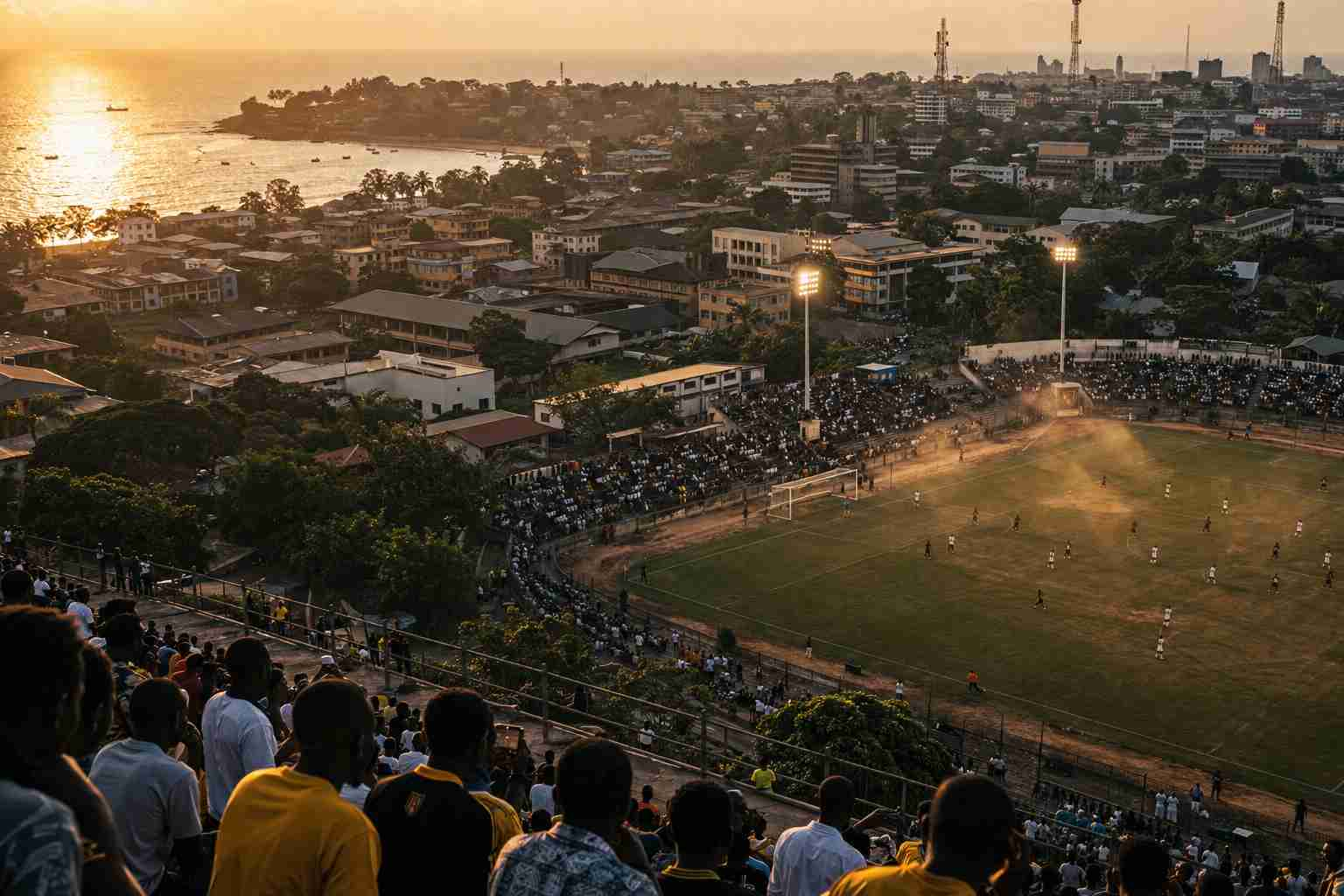
When people talk about West Africa’s sporting landscape, the conversation almost always narrows quickly. Someone brings up a club. Someone else brings up a player who just moved to Europe on a deadline day nobody saw coming. A tournament comes up, an injury update, a transfer rumour that turns out to be true three days later. All of it real, all of it worth talking about, and none of it, on its own, describes what building a long-term university sports platform actually requires.
That requires a different kind of attention. Not a scoreline. A map.
Where do the young people actually live, and how many of them are there. Where are the universities, and how fast are they growing? Where is football culture embedded so deeply into daily life that a stadium fills itself without being asked to. Where is the media and connectivity infrastructure mature enough to carry an audience past the final whistle and into a season-long relationship with a team. Where has something like this already been tried, in a real market, with real athletes, and worked.
Answer those questions honestly across the region, and three markets keep appearing at the top of the list, again and again, for reasons that have almost nothing to do with sentiment and everything to do with structure: Nigeria, Ghana, and Ivory Coast.
They are HiSL’s three pilot markets. Not because they were convenient, and not because they were first to come to mind, but because when the criteria that actually determine whether organised collegiate sports can take root in a market, demographic scale, education infrastructure, football culture, media reach, and a track record of what happens when talent meets structure, are laid side by side against every market in the region, these three keep coming out ahead. This is what that evidence actually looks like, market by market, and why building across all three at once is not a broader bet than building in one. It is a more precise one.
Nigeria: The Foundation Market
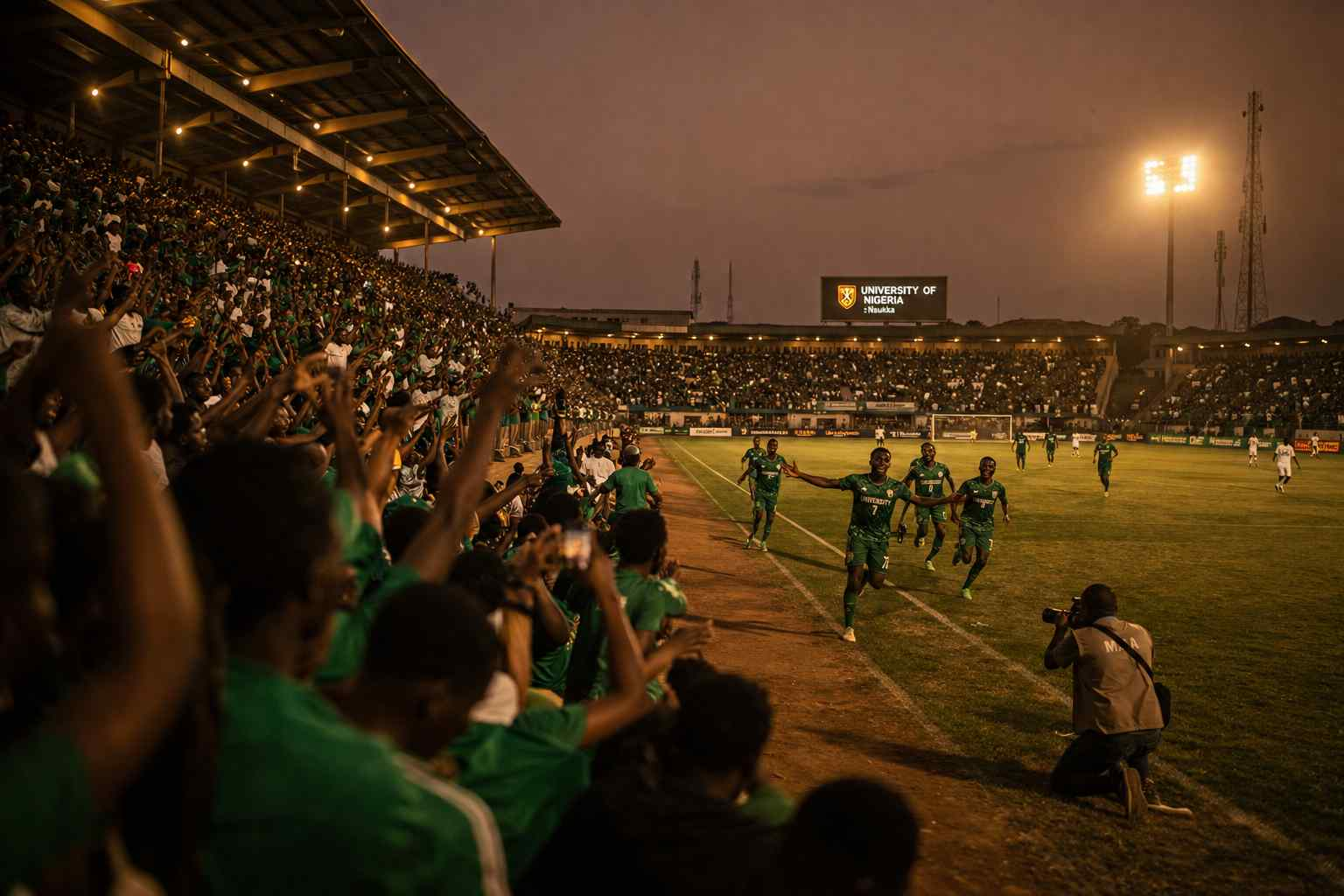
Nigeria is where the evidence already exists in its most concrete form, because Nigeria is where HiFL actually operated.
Between 2018 and 2023, HiFL ran organised university football inside Nigeria’s higher education system. Real competition. Real institutions on the record. Real athletes tracked from a campus trial through to a professional one. What that platform demonstrated wasn’t theoretical. Players who competed inside HiFL’s structure went on to professional careers in Hong Kong, Spain, Saudi Arabia, Scotland, and Kosovo. Others featured in the CAF Champions League. None of them were discovered by accident. They were visible because a structure existed that made a university footballer’s performance something a scout, a club, or a national federation could actually see and evaluate, season over season, rather than guess at from a single trial day that happened to fall on the right afternoon.
That track record matters enormously on its own terms. But it sits inside a demographic and institutional foundation that would make Nigeria a serious candidate for a collegiate sports platform even without it.
Nigeria’s youth population is not just large, it is young in a way that compounds over time. The World Bank’s demographic projections for Sub-Saharan Africa place the region’s under-25 population above 750 million by 2030, and Nigeria, as the continent’s most populous nation, carries a disproportionate share of that number. University enrolment across the country has grown in step with that demographic wave, part of a broader Sub-Saharan pattern that UNESCO’s Global Education Monitoring Report measures at more than 300 percent growth across two decades, a rate unmatched anywhere else in the world.
Layer football culture on top of that foundation and the picture sharpens further. Football in Nigeria is not a preference. It is closer to a civic language, spoken across every region, every income level, every campus courtyard where a ball and enough flat ground is all anyone needs. That cultural depth is precisely what makes a university sports structure viable at scale, because the audience does not need to be built from nothing. It already exists, watching, waiting for something organised enough to be worth following consistently, season after season, rather than catching fragments of it on a phone screen.
And then there is the World Cup context, which lands differently in Nigeria than anywhere else in this piece. Nigeria did not qualify for the 2026 tournament, a second consecutive World Cup missed, a fact Daily Post Nigeria and Punch have both examined at length as a structural and administrative failure rather than a talent shortage. The Super Eagles have produced some of the finest African footballers of the past two decades, and the current generation carries that same technical quality. What has gone missing is the pipeline, the system that should be converting individual brilliance into a functioning development structure consistently enough to qualify for the sport’s biggest stage.
The absence is not evidence that the talent isn’t there. It is evidence that the structure around it hasn’t caught up to what the talent deserves.
That is precisely the gap organised collegiate sports is built to close. Not by replacing the academy system or the national team structure, but by giving the years in between, the university years, the same seriousness of documentation and competition that the rest of the pipeline already claims to have. Nigeria is the foundation market because it is where that argument has already been tested and proven, in the years HiFL operated, and where the underlying demographic and cultural conditions make the case for scaling it larger than almost anywhere else in the region.
What the NBA’s Investment in West Africa Signals
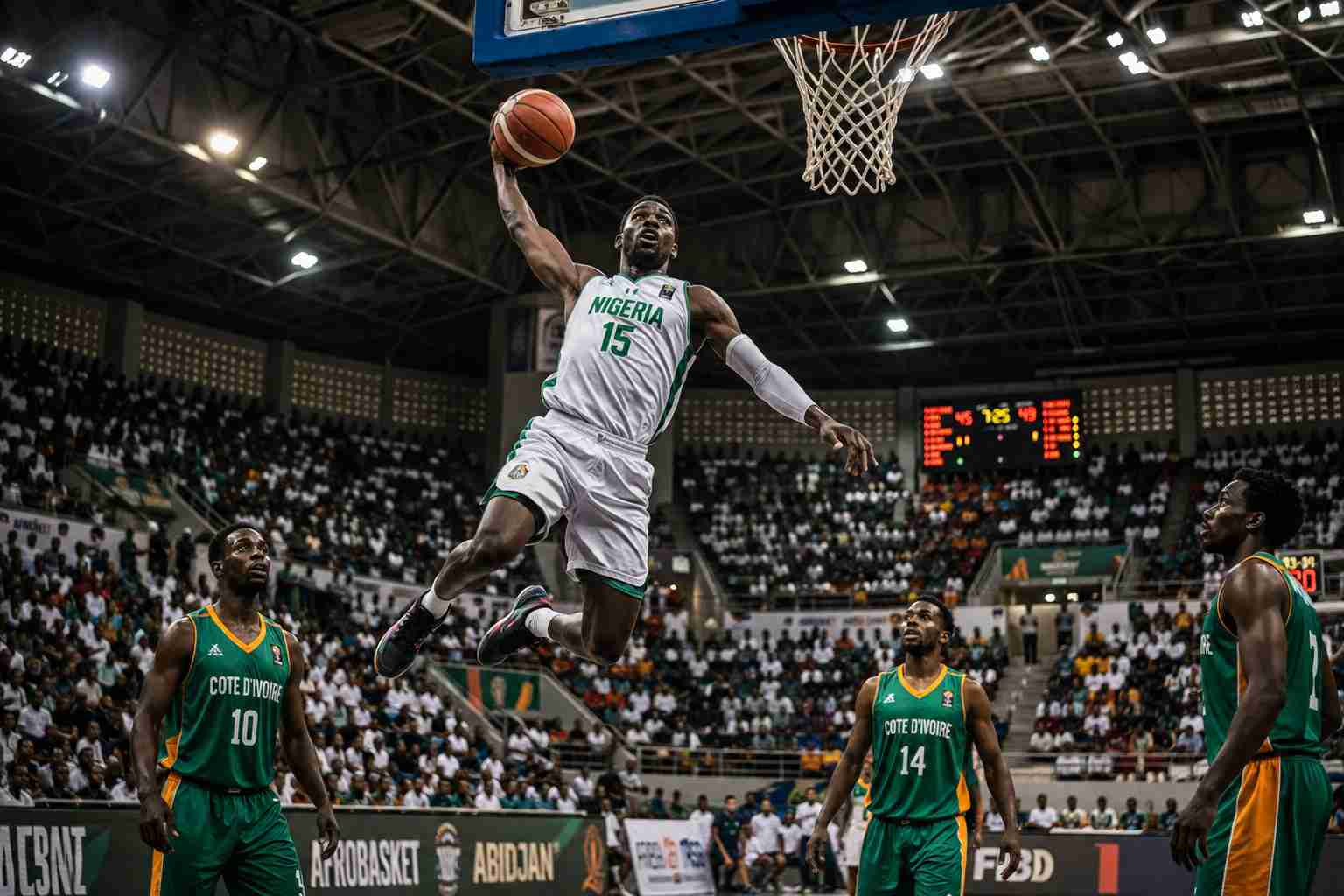
Football carries the argument in every one of HiSL’s pilot markets, and it should. But the clearest external validation of the multi-sport thesis behind HiSL doesn’t come from football at all. It comes from basketball, and specifically from the NBA’s sustained commercial commitment to the continent through the Basketball Africa League.
The NBA does not invest in African basketball infrastructure out of goodwill. It invests because the audience data justifies it, repeatedly, season after season. The league’s 2025 season drew more than 111,000 fans across its group phase games alone, filling arenas across multiple African cities in a competition still in its early years of existence. Digitally, that same period generated 2.7 million YouTube views, a number that reflects an audience actively choosing to follow organised African basketball rather than stumbling onto it by accident.
Those figures matter to HiSL for a very specific reason. The NBA is not building fan interest from scratch when it invests in African basketball. It is meeting an audience that already exists and giving it something organised enough to sustain that interest year over year. That is exactly the argument for organised university sport, applied to a different discipline, inside the same markets.
HiSL’s university basketball layer sits directly beneath that ecosystem, not as a replacement for it, but as the pipeline that feeds it. A structured collegiate basketball environment, one that documents athlete performance, runs a genuine competitive season, and connects outcomes to a broader development pathway, gives the organisations already validating African basketball’s commercial and competitive potential a new, earlier layer of talent to watch. The Basketball Africa League did not need to convince anyone that African basketball audiences exist. What it, and the wider commercial ecosystem building around it, is still missing is the structured university layer that turns raw athletic interest into a documented development pipeline, the same way HiFL did for football in Nigeria.
That is not a hypothetical extension of HiSL’s model. It is the same structural logic that makes Nigeria, Ghana, and Ivory Coast work as football markets, applied to a sport where the external commercial validation has already been written into an NBA-backed league’s own attendance and viewership numbers.
Ghana: A Natural Expansion Market
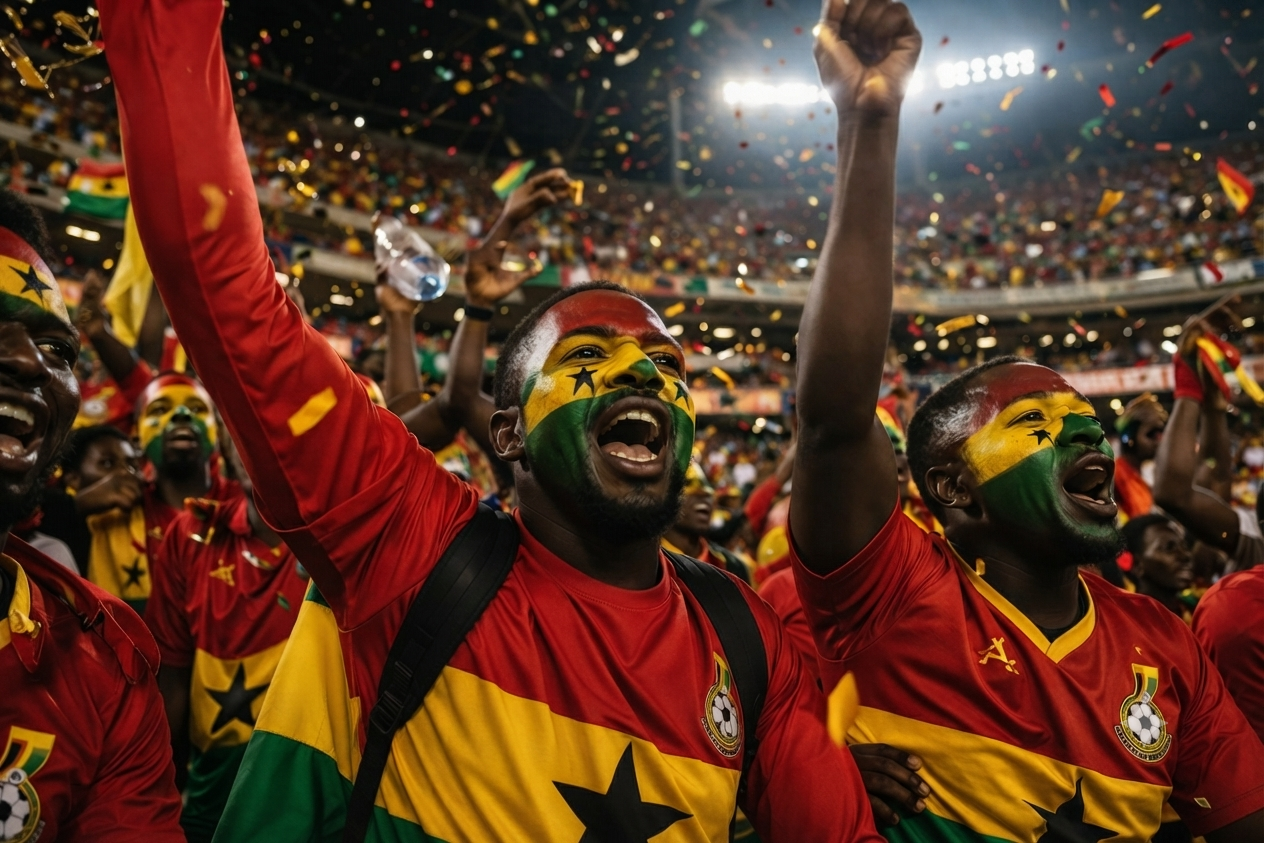
If Nigeria is the market where the model has already been proven, Ghana is the market where the underlying conditions are close enough to make expansion feel less like an experiment and more like a natural continuation.
Ghana’s football culture carries global weight that few nations its size can claim. The Black Stars have qualified for five World Cup tournaments, reached a quarter-final in 2010 that remains one of the most fiercely remembered moments in the sport’s African history, and arrived at the 2026 tournament as one of ten African nations inside a 48-team field, a record for the continent.
Ghana’s own 2026 campaign told a story that fits neatly inside the argument HiSL is built to make. A 1-0 win over Panama. A 0-0 draw against England that could easily have gone the other way. A 1-2 loss to Croatia that dropped them to third in Group L. And then, on points, goal difference, and disciplinary record across the tournament’s expanded field, a place among the eight best third-place finishers, advancing to the Round of 32 anyway. Their run ended there, a 1-0 loss to Colombia in Kansas City in the first days of July, but the manner of that elimination, fighting through on fine margins rather than collapsing early, is itself evidence of a football culture with real depth behind its headline talent.
Ghana didn’t need to win the group to prove the pipeline works. It needed to be good enough, consistently enough, to still be alive when the group stage ended. It was.
Ghana’s university sector has expanded steadily across both public and private institutions over the past two decades, tracking the same regional pattern of enrolment growth that defines Nigeria’s higher education story, at a scale proportionate to Ghana’s population. That growth matters because it means the raw material for a collegiate sports platform, students, campuses, institutional infrastructure capable of supporting organised competition, has been building quietly in the background of a football culture that has always had the country’s full attention.
Ghana also carries a regional weight in West African sport that extends beyond its own borders. The country has long functioned as a reference point for football development conversations across the region, a place where discussions of technical coaching, youth development, and competitive standards carry credibility because Ghana has repeatedly shown up on football’s biggest stage when many of its neighbours have not. Bringing organised collegiate sport into a market with that kind of standing does more than serve Ghana’s own student-athletes. It signals, to every other stakeholder watching the pilot unfold, that the model is credible in a country whose football judgment already carries weight across West Africa.
Ivory Coast: A Regional Opportunity
Ivory Coast arrived at the 2026 World Cup carrying more raw talent value than any other African squad in the tournament, and the country’s football story right now is less about reputation built over decades and more about a generation converting talent into global relevance in real time.
Transfermarkt valued Ivory Coast’s 2026 squad at €515 million, the highest of any African nation at the tournament, built around Amad Diallo’s rise into one of Manchester United’s most important attacking players, Franck Kessié’s 105 international caps of leadership and experience, and Seko Fofana’s midfield authority. That squad’s tournament ended in the Round of 32, a 2-1 loss to Norway on June 30, a defeat that came against a well-drilled European side rather than a collapse against a clearly superior opponent. For a squad valued that highly to go out at that stage says less about the players and everything about the same structural gap that defines this entire piece: talent identified early and developed brilliantly at club level in Europe, without the same structural depth feeding that talent from within Ivory Coast’s own domestic and university sport ecosystem.
That gap is precisely where the opportunity sits. Ivory Coast has invested substantially in tertiary education infrastructure across Abidjan and its secondary cities over the past decade, part of the same continental pattern of university sector growth that defines Nigeria and Ghana’s higher education stories. What has not caught up at the same pace is the structured sport ecosystem inside that university system: the competitions, the documentation, the pathway that turns a talented student-athlete into a name scouts are already tracking before a European club discovers him independently, the way Amad Diallo’s own path largely unfolded outside any formal West African development structure at all.
Ivory Coast also carries strategic weight that extends beyond its own borders, as the most prominent Francophone market inside HiSL’s three-country pilot. Nigeria and Ghana share an Anglophone institutional and football culture; Ivory Coast represents a genuinely different linguistic and administrative environment, one that, if the model works there as well as it has in Nigeria and as it is positioned in Ghana, demonstrates something considerably more valuable than three successful markets. It demonstrates that the model itself, not just its application inside one linguistic and institutional tradition, is what is actually working.
Why These Three Markets Work Together
Any one of these three markets could justify a standalone platform on its own merits. Nigeria has the demographic scale and the proven track record. Ghana has the football pedigree and institutional credibility. Ivory Coast has the talent density and the Francophone strategic reach. But the case for building across all three simultaneously, rather than choosing one and expanding later, rests on something none of them fully delivers alone.
Regional proximity means shared logistics, shared broadcast infrastructure, and a competitive calendar that can move between markets without rebuilding operational capacity from zero in each one. GSMA‘s connectivity data for West Africa shows mobile internet penetration rising in step across all three markets, which matters enormously for a platform whose broadcast and engagement strategy depends on digital reach rather than traditional television infrastructure alone. A content and competition calendar built to work across Lagos, Accra, and Abidjan is not three separate media strategies stitched together. It is one strategy, applied across a shared regional audience that already follows football, and increasingly basketball, across its own borders.
Shared demographics compound that advantage. All three markets sit inside the same extraordinary Sub-Saharan youth wave the World Bank has documented, and all three have university sectors expanding at rates that track the same regional pattern UNESCO has measured. That is not a coincidence of three unrelated national stories. It is one demographic and educational transformation, happening at roughly the same pace, across a region young enough and connected enough to make a genuinely regional platform commercially rational rather than merely ambitious.
Three markets, one demographic wave, one commercial logic. That is not diversification. That is precision.
And then there is what the 2026 World Cup cycle has made unmistakably visible: the gap between qualifying and advancing deep. Ten African nations reached this tournament, a record. Ghana fought through a difficult group all the way to the Round of 32. Ivory Coast arrived with the continent’s most valuable squad. Nigeria did not arrive at all. Every one of those outcomes, different as they look on the surface, points back to the same structural truth. The talent across this region has not been in question for years. What determines how far that talent travels, and how visibly, is the structure built around it long before any of these players reach a senior national team.
That is the argument for organised collegiate sports in general, and it is the specific argument for building it across Nigeria, Ghana, and Ivory Coast at the same time, in the three markets where the demographic foundation, the football culture, and the institutional infrastructure are already positioned to carry it.
Become A Founding Partner
Building a regional platform begins with understanding where the strongest foundations already exist. Follow HiSL as we continue exploring the opportunities shaping university sport across Nigeria, Ghana, and Ivory Coast.
To discuss brand partnership and sponsorship opportunities for the 2026 HiSL season, contact the HiSL partnerships team at partnerships@hislglobal.com or visit hislglobal.com/partners.