What Halftime at a Packed Campus Matchday Looks Like, and Why Brands Want to Be There
An HiSL matchday starts well before the first whistle. Students begin gathering across campus, conversations turn into rivalries, friends arrive in groups, and the energy steadily builds around the occasion. Hours before kickoff, activation spaces are already alive with interaction, anticipation, and community.
By the time competition reaches its peak, brands are no longer appearing alongside the experience, they are part of it. They exist within the moments students remember, share, photograph, discuss, and carry back into campus life long after the match has ended. That level of attention, participation, and cultural relevance is difficult to manufacture and even harder to buy through traditional media alone.
Picture this.
By the time halftime arrives, the energy inside the stadium has taken on a life of its own.
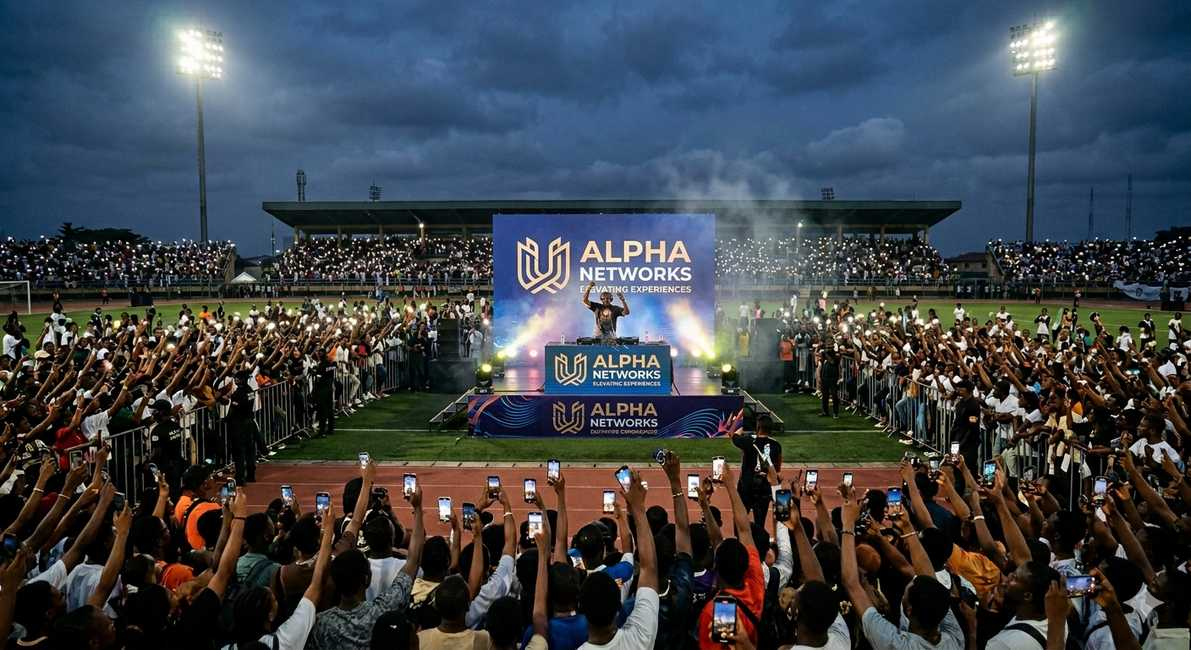
The match may have paused, but the crowd has not. Students remain on their feet, replaying first-half moments, singing with friends, and capturing the atmosphere around them. Then the entertainment begins, music fills the venue, phones rise across the stands, and thousands of students start sharing the experience in real time.
This is what makes an HiSL matchday unique. The competition brings people together, but the occasion itself becomes the story. Every photo, video, and reaction extends the experience beyond the stadium into campus communities, alumni networks, and social feeds across the region.
For brands, the value lies in being part of moments people genuinely care about. Not simply being seen, but being present within experiences students choose to remember, share, and talk about long after the final whistle has blown.
The commercial logic of the HiSL platform is not complicated. It is just rarely explained from the inside. This article does that. Every section below is a description of what actually happens at a matchday, function by function, and why the brands building their activation strategies around it are making one of the most efficient youth marketing decisions available in the West African market today.
The platform attracted some of the continent’s most credible corporate partners because it solved a genuine problem: how do you reach a generation of young people in a way that means something to them? Not through billboards they scroll past, through the sport they care about, the team they support, and the campus they call home.
One Hour Before Kickoff: Where Sponsor ROI Actually Begins
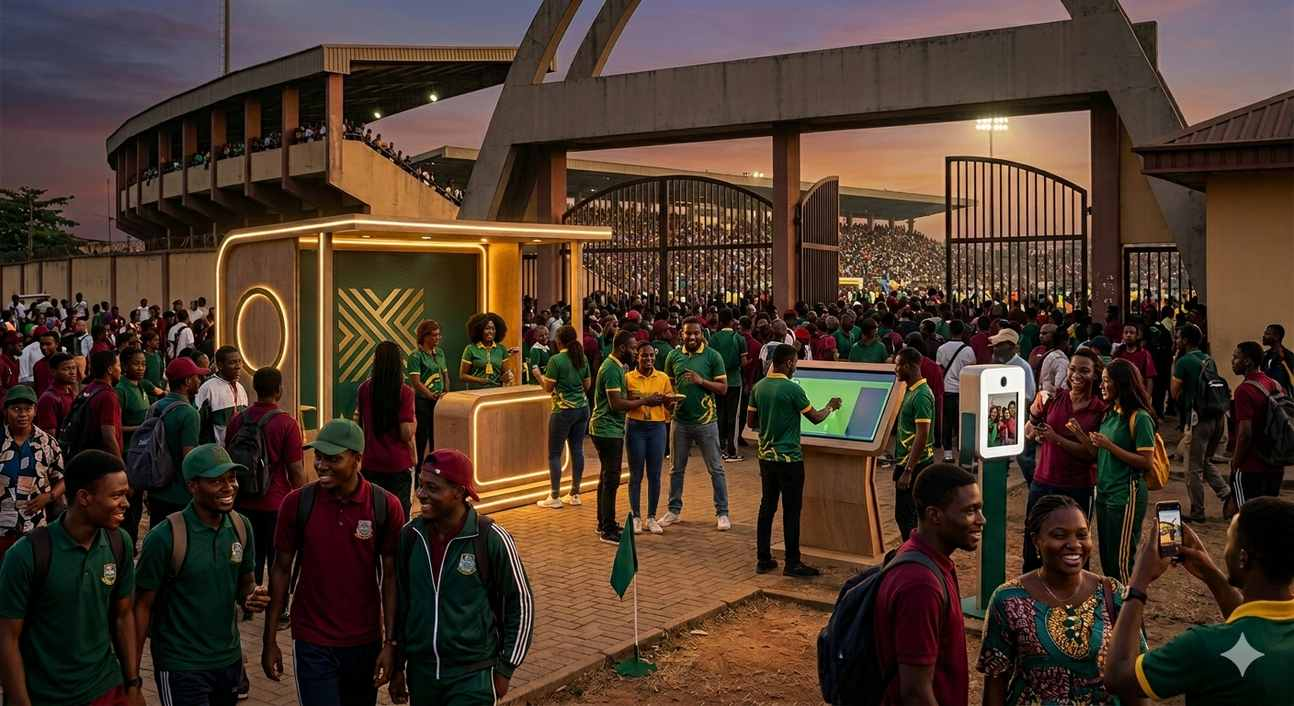
Brand activation at an HiSL matchday does not begin at kickoff. It begins one hour before, and that hour is, commercially, some of the most valuable time a brand team operates in the West African youth market.
The gates open. Students arrive in groups, already in the mood. They have come with their friends, wearing their institutional colours, looking for something to do before the competition begins. The campus activation partner’s field team is already set up and operating, with the platform’s institutional standing giving them a position inside the occasion that no cold acquisition campaign can achieve.
This is the distinction that experienced brand managers recognise immediately when they see it. There is a categorical difference between a brand team approaching a consumer in a neutral environment, cold, transactional, interruptive, and a brand team operating inside an occasion that the consumer is already emotionally invested in. The pre-match hour at an HiSL matchday is entirely the second category.
Students arriving at a matchday are not neutral. They are already engaged. They are already in a group. They already have time to spare and attention to give. The campus activation partner’s presence is not an interruption to the matchday experience, it is a recognised part of it. Students approach because something is happening, not because they are being stopped. The field team engages with institutional credibility behind them, because the platform’s relationship with the university means the activation has been sanctioned at the level that students recognise and respect.
What that means practically is a pre-match window in which the most commercially valuable youth demographic across West Africa’s university markets is available, receptive, and actively generating content that extends the activation’s reach far beyond the stadium walls. Cold acquisition becomes warm engagement. Data capture becomes genuine conversation. The brand interaction becomes a matchday memory rather than a marketing interruption.
The hour before kickoff is not warm-up time. It is prime time.
The Match Itself: Production That Makes Content
As kickoff arrives, the stadium seems to move as one. The noise builds, the anticipation peaks, and for a few hours nothing else on campus feels quite as important. Every element, from the match presentation to the atmosphere in the stands, comes together to create an experience people are fully present for and genuinely invested in.
Campus rivalry competition at the collegiate level carries a specific emotional intensity that professional sport rarely replicates, because the stakes are personal. These are not fans supporting a franchise. They are students defending the identity of the institution they live inside every day. That intensity is not manufactured. It exists because proximity creates genuine rivalry, and genuine rivalry creates the kind of unscripted, emotionally charged atmosphere that no production budget can manufacture and no artificial occasion can replicate.
That intensity is the content. Production makes it distributable.
A sixty-second clip from a cross-city rivalry matchday does not need a media budget to travel. It travels because the students who filmed it are the distribution channel. Every person in that stadium is a content creator with a direct line to their campus community, their secondary school network, their family group, and their social following. When the content is good, and the platform’s broadcast-standard production ensures it is consistently good, the distribution is automatic, organic, and reaches communities that paid media cannot access at any cost.
The branded matchday boards in every camera angle are not incidental placements. They are structural ones. Every clip shot by every student in the stadium, whether it captures a goal, a set piece, a chant, or a crowd reaction, carries the brand in the background. Not intrusively. Contextually. Associated with the moment of peak emotional investment rather than interrupting it.
This is the distinction between advertising and association. Advertising asks for attention. Association earns it by being present at the moment attention is freely given.
Halftime: The Peak Social Media Moment of the Day
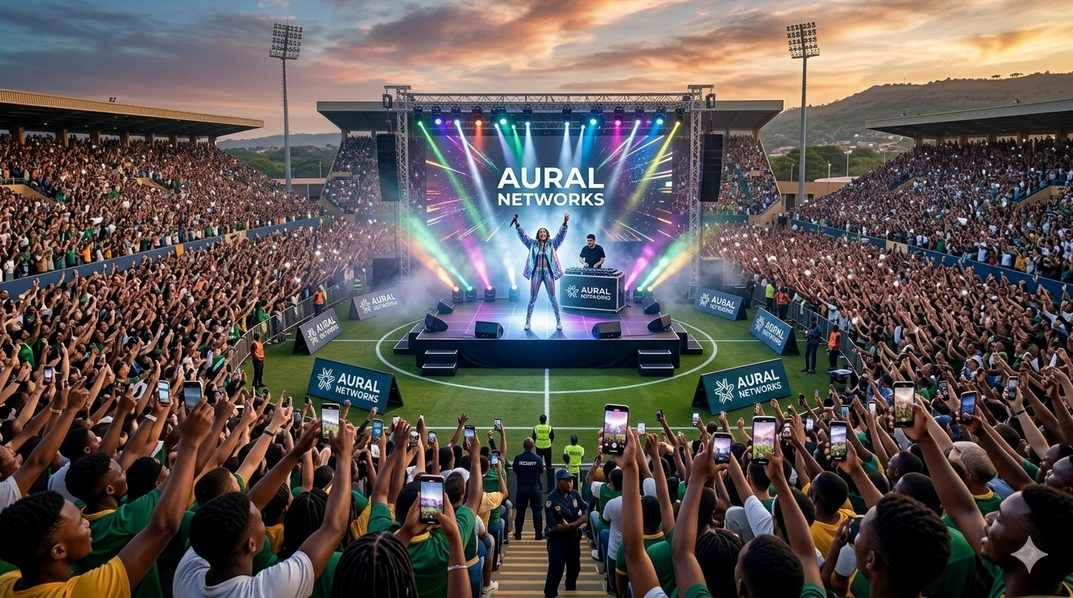
The first half ends. The performer takes the stage. Fifteen to twenty minutes. The founding partner’s name is on the backdrop, prominent, elegant, and present in every frame of every clip that is about to be created in this stadium simultaneously.
What happens in the next twenty minutes is not a break in the event. It is the event’s commercial peak.
The crowd that has been channeling competitive energy into chanting and watching is now fully released into collective celebration. The competitive tension of ninety minutes of rivalry collapses into a single shared moment of sound, movement, and community. Every phone comes out. Every angle of the performance is being captured simultaneously. The backdrop, with the founding partner’s branding present across every frame, is in every clip that is about to leave this stadium and travel to every campus community connected to everyone in it.
Each clip posted by a student is an organic impression that carries the brand to every follower that student has. Multiplied across a stadium at capacity, each student in their own network, connected to their own campus community, the organic reach generated in a single halftime set exceeds what most brands achieve from a week of paid social media spend targeting the same demographic. At a fraction of the cost. With a quality of emotional association that paid impressions cannot manufacture.
The entertainment sponsor is funding the performance as part of their own activation package. That is not a coincidence of programming. It is a commercial design. Halftime costs the platform nothing to produce because the entertainment value is being funded by a partner whose activation logic is identical to the founding partner’s: be the name present when the content is being made.
Two partners. One occasion. Shared organic reach. Zero production cost to the platform. This is what structured collegiate sports commercial architecture looks like when it is functioning correctly.
The founding partner is not buying a logo placement. They are buying the moment when thousands of students stop being an audience and start being a distribution network, with the brand’s name in every frame they produce. No billboard achieves this. No digital display achieves this. No influencer campaign achieves this cost-per-impression, at this emotional intensity, with this level of authenticity.
The halftime set ends. The players return. The second half begins. The clips are already being uploaded.
Post-Match: The Award Moment That Travels Further Than a Billboard
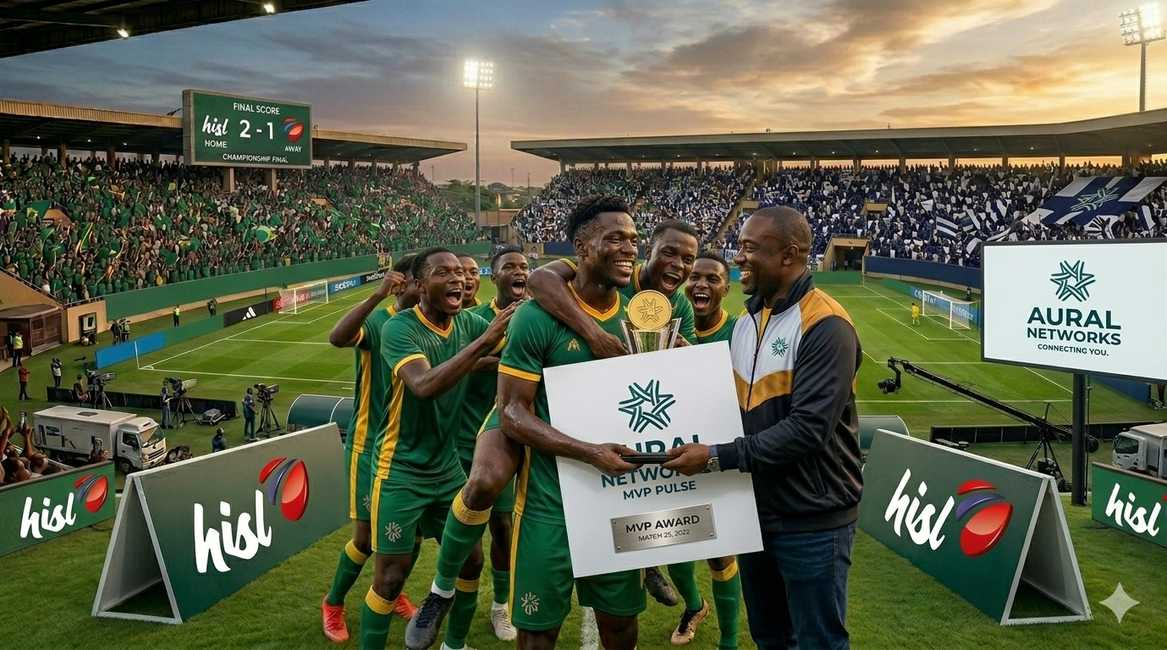
The final whistle. The matchday award is presented by the sponsor.
One image. Brand name. Award. Winning students, still in competition kit, still at the peak of their emotional intensity, surrounded by teammates and the crowd behind them.
That image is the sponsor’s primary deliverable from the matchday, and it is worth understanding precisely why it is worth more than any media placement of comparable cost.
The winning students post it first. Then their teammates post it. Then their institution’s sports page posts it. Then the institution’s main account shares it. Then the students who filmed the award presentation post their own versions. Then the communities connected to all of them share further. The same image, or variations of it, propagates through every network connected to everyone who was in that stadium. Every one of those shares carries the brand name. None of that distribution was paid for. All of it happened because the moment was genuine.
Real students. Real competition. Real achievement. Real emotion. The brand is present in that moment not as an advertiser interrupting the experience but as the entity that made the recognition possible. That is an entirely different kind of commercial association, and it travels through entirely different kinds of networks.
Compare that to a billboard on a city expressway. A billboard is seen by commuters in transit, distracted, passive, moving past. There is no emotional context. There is no community network attached to the viewing moment. There is no content creation triggered by the exposure. The billboard impression is flat.
The award moment impression is alive. It travels through networks of people who care about the outcome, are emotionally invested in the winner, and are actively sharing because they want to, not because they were paid to. The brand that presents the award is associated with that emotion across every share, in every network, at zero incremental distribution cost.
The platform’s founding season in Nigeria demonstrated this mechanism at scale: not through paid media, but through occasions that students genuinely wanted to share, with brand presence embedded in those occasions rather than interrupting them. The matchday award moment is that mechanism at its most concentrated and most commercially repeatable.
Why This Model Is More Valuable Than It Looks on a Rate Card
The commercial case for HiSL matchday brand activation is not made by reach numbers alone, though the reach, across a structured season of matchdays from group stages through to the season-climax event, is substantial. It is made by the combination of factors that no single media channel can replicate simultaneously.
Captive and motivated audience:
Students at a matchday are not passive consumers. They are present by choice, emotionally invested, and actively engaged. The quality of attention at a university rivalry matchday is categorically different from attention quality on a digital feed or in a transit environment.
Institutional credibility:
The platform’s governance framework, built on formal institutional alignment with the relevant sporting and academic authorities in each market, gives partner brands a context that peer-to-peer marketing and influencer campaigns cannot provide. Brands associated with the platform are associated with an institutionally recognised, university-backed structure.
Four activation touchpoints in one occasion:
Pre-match field team engagement. In-match branded board signage. Halftime entertainment backdrop. Post-match award presentation. Four distinct activation moments within a single matchday, each generating different content, reaching different networks, and producing different types of brand association within the same window.
Season-long commercial narrative:
A matchday activation is not a standalone event. It is one episode in a season-long story that has been building since the season-opening announcement and will continue through to the season-climax event. Each matchday activation adds to a cumulative brand presence that grows in recognition and credibility as the season progresses.
Early partnership creates structural leverage:
Partners who enter the commercial framework early influence the platform’s commercial architecture before it is fully formed. They shape activation strategy across new markets as the expansion roadmap progresses. They build brand association at the valuation stage, long before monetization accelerates and entry costs compound.
Brands entering the HiSL commercial framework in the current season are not buying an advertising slot. They are building a category position inside a platform that is expanding across West Africa. As the platform moves into additional markets through its phased expansion roadmap, the brands already embedded in its commercial architecture extend into those new markets, with established association, at no additional acquisition cost.
Brands associated with this platform are not buying impressions. They are building a category position inside a platform whose commercial value compounds with every new market it enters.
What People Remember When the Day Ends
Long after the final whistle, the result is only part of what people take home with them.
They remember where they were standing when the crowd erupted. They remember the halftime performance that brought the stadium together. They remember celebrating with friends, taking photos, sharing moments, and feeling part of something bigger than a single match.
That is the unique quality of a great collegiate sports occasion. The memories are not confined to the action on the pitch. They are built through everything surrounding it, the atmosphere, the community, the rivalry, and the shared experience of thousands of students gathering in one place.
As the winning team lifts the trophy and the celebrations begin, phones appear across the stadium almost instinctively. Friends record each other. Supporters capture the moment. The images travel across campuses, group chats, and social feeds, carrying the story of the day far beyond the venue itself.
For many students, those moments become part of how they remember the season. Not simply because a match was played, but because they were there to experience it.
Note for Commercial Partners and Brand Teams
Note for Institutional and Commercial Stakeholders
This article forms part of HiSL Global Sport’s 2026 strategic communications series, providing insight into the matchday environments, audience experiences, and collegiate sports infrastructure being developed across West Africa.
Institutions, Commercial Partners and Brand Teams interested in building a relationship with the platform should contact the team at partnerships@hislglobal.com or visit hislglobal.com.