Why West Africa Needs a Structured Collegiate Sports Ecosystem
Every September, thousands of talented young athletes walk onto university campuses across Nigeria, Ghana, and Ivory Coast carrying something that no scout, no recruiter, and no federation has fully accounted for. They carry ability. Real, competitive, occasionally exceptional ability, the kind that shows up on five-a-side courts, in inter-hostel football matches, on quiet athletics tracks behind lecture halls, in basketball games that draw a few hundred students on a weekday evening. Most of that ability will never be seen by anyone positioned to do something with it. Some of it will burn out quietly by final year. A small fraction will find its way into professional sport almost by accident, through a trial nobody organised, a video someone happened to post, a conversation that went the right way at the right moment.
Talent has never been the problem in West Africa. It has never even been close to the problem. What has been missing, consistently, for decades, is the system built to find it, develop it, and carry it somewhere. Without a structured collegiate sports ecosystem, universities across the region continue to produce graduates every year, but not the full generation of athletes, coaches, sports administrators, and commercial opportunities that campuses of this size and this energy are actually capable of producing. This is not a talent gap. It is an infrastructure gap, and it is one of the more solvable problems in African sport today.
The Untapped Potential Inside West African Universities
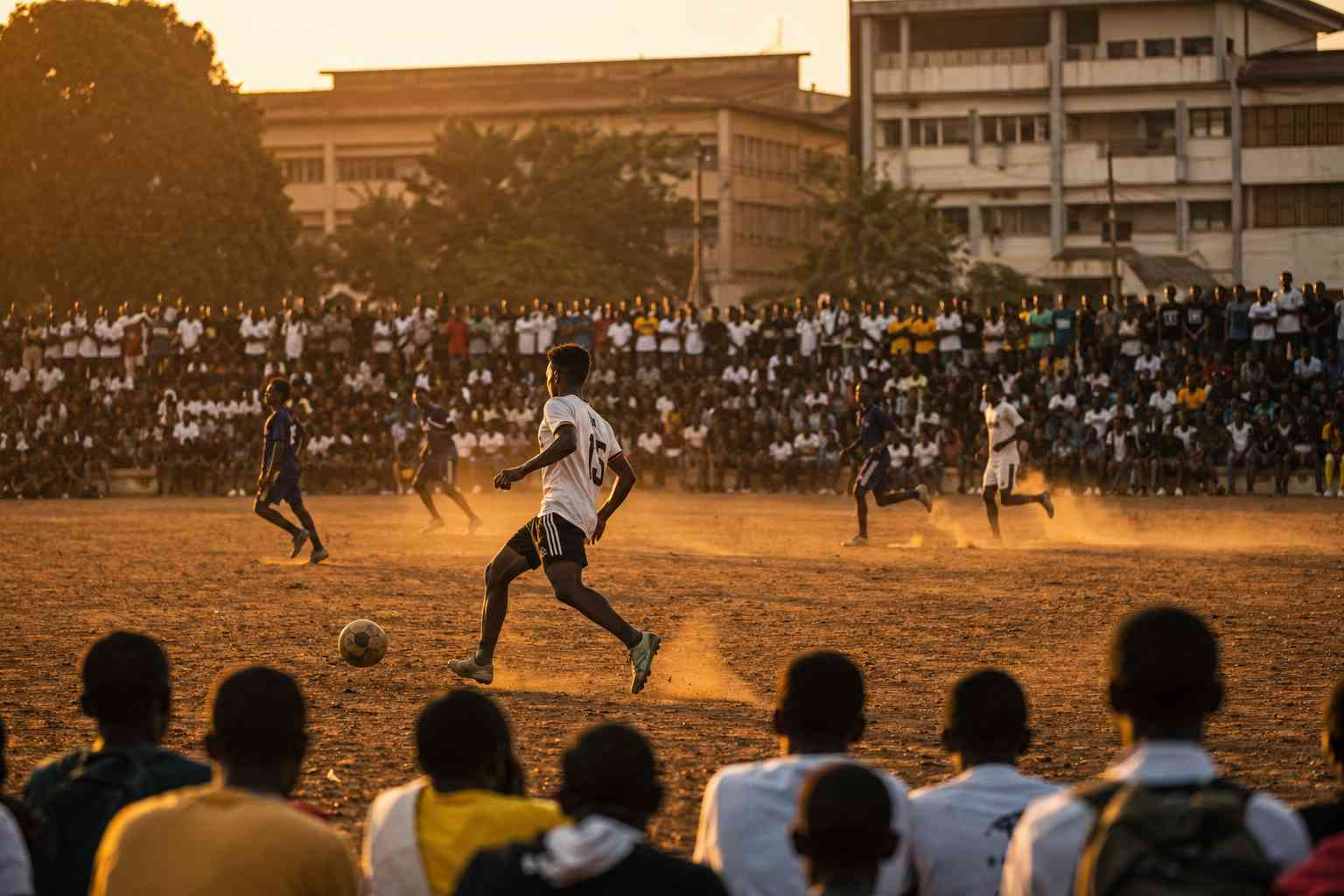
There is a number worth sitting with before anything else. According to the World Economic Forum, more than 60 percent of Africa’s population is under the age of 25, making it statistically the youngest continent on earth. UNICEF’s demographic projections go further, showing that West Africa is set to see the single largest increase in primary and secondary-age population of any sub-region on the continent, a wave that, by the time it reaches university age, represents one of the largest concentrations of physically prime, competition-ready young people anywhere in the world. That wave is arriving on campuses right now, not in some projected future.
“West Africa isn’t short on athletes. It’s short on the structure that turns a student with ability into an athlete with a pathway.” Universities are, almost by design, the single most efficient place to find this talent in one location. Nowhere else brings together tens of thousands of young people in the ideal age bracket for elite athletic development, already organised into institutions, already operating on predictable academic calendars, already equipped, even if underused, with pitches, courts, and tracks. A professional academy has to go looking for talent, one trial at a time, one region at a time. A university campus already has it assembled, sorted loosely by faculty and hostel, playing informally most evenings of the week, for free, for nobody watching.
Over 60 percent of Africa’s population is under 25 years old, the youngest population profile of any continent. UNICEF projects West Africa’s primary-school-age population will grow by roughly 22 million people between 2015 and 2030, the largest regional increase on the continent. That growth curve is now reaching university enrolment age across the pilot markets this platform is built around. What makes this more than a demographic footnote is what happens to that concentration of talent once it is inside a university system with even modest structure around it. Age is not the only advantage campuses offer. Universities already have accommodation, medical facilities of some standard, academic staff experienced in managing schedules around competing demands, and, critically, an institutional identity that students are willing to compete for. Ask any student who has played for their faculty or hostel in an inter-departmental tournament how seriously they took it, and the answer tends to surprise people who assume university sport is a hobby. It rarely is, to the people playing it. It is treated, informally, with the intensity of something that matters. What is missing is not motivation. It is the framework that would let that motivation compound over seasons instead of dissolving every semester when the informal tournament ends and nothing replaces it.
This is precisely the gap that a properly built collegiate sports ecosystem is designed to close, not by inventing interest in university sport, which already exists in abundance, but by giving that interest somewhere to go.
What a Structured Collegiate Sports Ecosystem Actually Looks Like

There is an important distinction that gets lost too often in conversations about university sport in this region, and it is worth being precise about it. An occasional inter-university tournament is not a collegiate sports ecosystem. A one-off cup competition, run once and never repeated with the same rigor, is not a collegiate sports ecosystem either. What separates a genuine ecosystem from an event is continuity, the presence of systems that operate the same way, season after season, regardless of who is in charge that year or which sponsor happens to be active at the time.
A real collegiate sports ecosystem rests on a handful of operational pillars that, individually, sound almost administrative, but together are what actually make athlete development possible at scale. There has to be a defined season structure, with fixtures scheduled far enough in advance that universities, broadcasters, and athletes can plan around it. There has to be a clear eligibility system, so that competition integrity is protected and no institution is left wondering whether the team across from them fielded players honestly. There has to be consistent officiating, applied to the same standard from the opening fixture to the finals. There has to be a sports medicine framework, however modest, protecting athletes physically instead of leaving them to manage injuries alone. There has to be coaching development running in parallel to athlete development, because a talented eighteen-year-old coach inconsistently rarely becomes a disciplined twenty-two-year-old professional. And increasingly, in a data-literate sporting world, there has to be performance data collection, attendance, statistics, physical benchmarks, captured consistently enough that a scout, an academy, or an investor can actually trust what they are looking at.
“The difference between a tournament and an ecosystem is simple. The tournament ends. An ecosystem compounds.”
None of this is theoretical. It is, in fact, the exact set of lessons that emerged from Nigeria’s own collegiate football experiment, HiFL, the Higher Institutions Football League, which operated as a single-sport, single-country proof of concept for structured university football. HiFL demonstrated, over its operating seasons, that Nigerian university footballers who came through a properly governed, consistently scheduled, professionally officiated system could go on to compete professionally well beyond Nigeria’s borders, turning up in Hong Kong’s top flight, in Spanish football, in Saudi Arabia, in Scotland, in Kosovo, and in continental competition through the CAF Champions League. That outcome did not happen because Nigerian university football suddenly produced better players than it had in previous decades. It happened because, for the first time, there was a system consistent enough to develop those players in front of people positioned to notice them.
The scouting logic behind structured university competition is not unique to West Africa. Pulse Sports Nigeria has noted that the newly expanded 48-team FIFA World Cup format is expected to reshape football scouting globally, widening the net for clubs and national federations to look beyond traditional leagues into smaller and previously overlooked talent markets. A structured collegiate sports ecosystem is precisely the kind of previously overlooked market that expanded scouting logic is built to find.
Multi-sport structure matters here too, and it is worth being direct about how a collegiate sports ecosystem should be sequenced across a region as varied as West Africa. Football remains the natural anchor competition in every market, the sport with the deepest existing fan base, the clearest professional pathway, and the strongest commercial pull. But a genuine collegiate sports ecosystem does not stop at one sport. Basketball, athletics, and other disciplines sit meaningfully within the same structural framework, benefiting from the same season scheduling, the same governance standards, and the same data infrastructure, without needing to compete with football for primacy in any single market. The point of a multi-sport collegiate structure is not to dilute focus. It is to ensure that a talented middle-distance runner or a gifted point guard on the same campus has access to the same institutional seriousness that a footballer does, rather than being left entirely dependent on football’s head start.
The Value Created Beyond the Playing Field
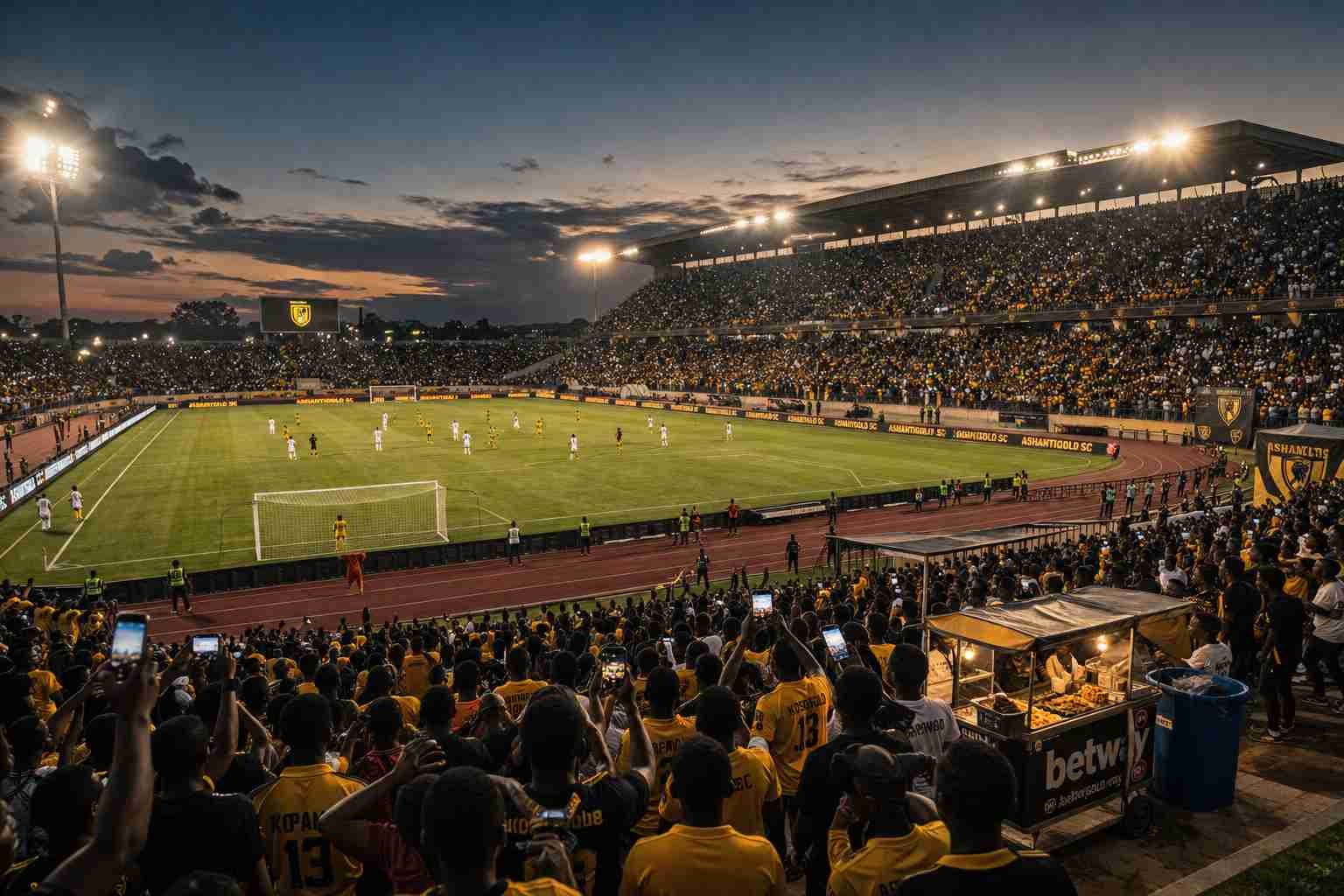
It is tempting to talk about collegiate sport purely in terms of the athletes who benefit from it, and they matter enormously. But limiting the conversation to athletes alone understates what a functioning ecosystem actually creates, and undersells why institutions, businesses, and governments outside the sports industry should be paying attention.
Universities themselves are among the first beneficiaries. Institutional identity is built, in large part, through shared experience, and few shared experiences generate the kind of collective pride that a competitive, well-run sports team does. A university with a genuinely competitive, visible sports programme has a stronger student engagement story to tell prospective students, a stronger alumni connection to draw on, and a stronger case for institutional partnerships than one without. This is not a uniquely African insight, it is one of the oldest and most consistently proven dynamics in higher education systems worldwide, and there is no structural reason it should not translate to Nigerian, Ghanaian, and Ivorian campuses with the same effect.
Brands and commercial partners are the second, and arguably most immediate, beneficiaries of a structured system. West Africa’s youth population is not just large, it is increasingly connected. According to GSMA’s Mobile Economy Africa research, mobile technologies and services contributed roughly 240 billion dollars to Africa’s economy in 2025, equivalent to 7.8 percent of GDP, while supporting an estimated 13 million jobs across the continent. That is a digitally engaged, economically active youth audience that brands across telecom, fintech, and FMCG sectors are already competing hard to reach, and a concentrated, campus-based, season-long collegiate sports platform offers a far more structured and measurable way to reach that audience than scattered, one-off youth marketing activations typically manage.
“A matchday is never just a matchday. It is a stadium full of the exact demographic every consumer brand in this region is trying to reach, organised, recurring, and already paying attention.”
UNICEF’s demographic modelling shows West Africa’s primary and secondary school-age population growing faster than any other African sub-region through 2030. Meanwhile, GSMA’s Mobile Economy Africa 2026 report puts the continent’s mobile-driven economic contribution at 240 billion dollars in 2025 alone. Together, these two data points describe the same audience from two directions, a large, young population that is also digitally reachable at unprecedented scale.
Local economies see a version of this value too, even if it is smaller in scale and harder to measure with the same precision. Matchday activity around a competitive fixture, transport, food vendors, informal retail around a stadium, local media coverage, creates real, if modest, economic circulation in the communities surrounding host campuses. It is not the primary argument for building a collegiate sports ecosystem, but it is a genuine secondary effect, and one that compounds the more consistently fixtures are scheduled and the more reliably crowds show up to them.
And then there is the wider sporting industry itself, which arguably has the most to gain from a properly structured system, because it currently operates with almost no reliable talent identification infrastructure below the professional level in most West African markets. Scouts, academies, and national federations across the region are, in effect, searching for talent with incomplete maps. A collegiate sports ecosystem that consistently produces performance data, standardised competition footage, and verified competitive history does not just help athletes get seen, it gives the entire scouting and player development industry something it has rarely had access to at this level: a trustworthy, repeatable source of vetted talent, tracked over multiple seasons rather than a single trial.
Building the Future Instead of Waiting for It

None of what has been described so far happens by accident, and none of it happens quickly. That is arguably the hardest part of this conversation, because West African sport has, historically, been more comfortable with the tournament than with the institution, more inclined to organise a single high-profile event than to commit to the years of unglamorous scheduling, governance, and data infrastructure that a genuine ecosystem requires. Building a structured collegiate sports ecosystem is, fundamentally, an exercise in patience applied to a sector that has rarely been given the chance to practise it.
This is where the current moment in African football is instructive, whether the region wants the lesson or not. The 2026 FIFA World Cup, running from June 11 through July 19, has become an unusually clarifying case study in what structure does and does not achieve on its own. Ten African nations qualified for this tournament, a record, up from five at the previous edition, and two West African sides, Ghana and Ivory Coast, are competing on football’s largest stage this summer. Ghana sits in Group L alongside Panama, England, and Croatia, captained by Jordan Ayew and carrying a real attacking threat through Antoine Semenyo’s club form this season. Ivory Coast, in Group E against Ecuador, Germany, and Curaçao, arrives with a squad valued by Transfermarkt at roughly 515 million euros, the highest of any African nation at this tournament, anchored by Franck Kessié’s veteran international experience and the debut tournament appearance of Manchester United’s Amad Diallo.
Nigeria is absent from this World Cup for a second consecutive edition, and that absence has been widely and publicly described, including by outlets like Daily Post Nigeria and Punch, as a structural and administrative failure rather than a talent shortfall. This is, in many ways, the entire argument for a collegiate sports ecosystem stated in miniature. Nigeria has never lacked footballing talent. What repeated World Cup qualification cycles keep exposing is the absence of dependable systems, at various levels of the football pyramid, capable of consistently converting that talent into results. A structured collegiate sports ecosystem will not fix a federation’s administrative challenges. But it can do something meaningful in its own lane: build one additional, reliable layer of the talent pipeline that currently does not exist with any consistency at the university level, feeding into the same pathway that, eventually, national teams draw from.
A record ten African nations qualified for the 2026 FIFA World Cup, up from five at the previous tournament. Ivory Coast’s World Cup squad carries the highest market valuation of any African side at the tournament, according to Transfermarkt, at approximately 515 million euros. Nigeria’s absence from a second consecutive World Cup has been described by national outlets including Punch and Daily Post Nigeria as reflecting structural football governance issues rather than a shortage of playing talent, underscoring that pipeline infrastructure, not raw ability, remains the region’s central sporting challenge.
Elsewhere in African football, the same lesson about structure keeps surfacing in less visible ways. Ghana’s football association has publicly disclosed a debt of 842,173.36 dollars owed to broadcaster StarTimes, a confirmed figure from GFA’s own official statement, illustrating just how fragile commercial and administrative infrastructure can remain even at a national federation level. It is a reminder that building durable sporting systems in this region is not simply a matter of ambition or talent identification. It requires financial discipline, governance consistency, and commercial models built to last multiple seasons rather than a single sponsorship cycle, the same qualities a serious collegiate sports ecosystem has to be designed around from the outset.
This is why the emergence of professionally organised, multi-sport university competition in West Africa matters as more than an incremental improvement on what already exists. It represents a shift toward continuity over spectacle, toward institutions, coaching pipelines, medical standards, and verified performance data that persist regardless of which season is currently being played, rather than isolated tournaments that generate a moment of excitement and then disappear until someone decides to organise the next one. The three-market pilot approach now taking shape across Nigeria, Ghana, and Ivory Coast reflects exactly this kind of deliberate, staged patience, building the operational foundation properly in a focused set of markets before expanding further across the continent, into markets like Kenya, as part of a genuinely long-term vision rather than a rushed one.
The World Cup will end on July 19. The attention it has generated around African football, the renewed scouting interest in overlooked talent markets that Pulse Sports Nigeria and others have written about, and the uncomfortable questions Nigeria’s absence has raised about systemic pipeline failure will not disappear the day the final whistle blows. What happens next depends entirely on whether the region uses this moment to build something that outlasts a single tournament cycle, or waits, as it so often has, for the next moment of excitement to arrive on its own.
Collegiate sports infrastructure is not a quick fix, and no honest account of what it takes to build one should pretend otherwise. But it is one of the few interventions available to West African sport right now that addresses the actual root of the problem, not a shortage of talented young athletes, which the data on the region’s youth population makes clear is not the issue, but the absence of the structured, patient, multi-season systems capable of finding that talent and carrying it somewhere real.
The future of West African sport will not be built by talent alone. Talent has never been the region’s shortage. It will be built by the systems that find that talent, develop it consistently, and carry it somewhere real, season after season, not tournament after tournament. Follow @HiSLGlobal for more on the future of collegiate sport, athlete development, and university competition across the region. If your institution, organisation, or brand wants to help shape what structured university sport in West Africa becomes next, reach out at partnerships@hislglobal.com.