What Makes a Great University Sports Ecosystem?
Great university sports ecosystems do not happen by accident. Nobody wakes up one morning to find a fully formed sporting culture, complete with rivalries, alumni networks, broadcast deals, and a stadium that fills itself. Every ecosystem that works, whether it took root in a single American college town or across an entire nation’s university network, was built. Deliberately. Layer by layer. Usually over decades, and usually by people who understood that no single ingredient, on its own, was ever going to be enough.
It is tempting to reduce the conversation about university sport to its most visible element: the games themselves. The Saturday crowd. The rivalry fixture. The highlight reel. But an ecosystem is not a single Saturday. It is everything that makes that Saturday possible, everything that makes it matter, and everything that ensures it happens again next season, and the season after that, with the same or greater intensity.
A genuine sporting ecosystem rests on four interlocking pillars: the institutions that anchor it, the competition that structures it, the community that gives it meaning, and the commercial activity that sustains it without ever becoming its purpose. Remove any one of the four, and the whole structure weakens, even if the other three remain intact. HiSL is here to close that gap. Understanding how these pillars actually work together, rather than treating them as separate initiatives running in parallel, is the difference between an ecosystem that compounds in value year after year and a collection of matches that happens to repeat.
The Role of Institutions
Every durable sporting ecosystem in the world is anchored to an institution, or a network of institutions, that outlasts any single season, any single athlete, and any single administrator. This is not a small detail. It is the foundation everything else gets built on.
Universities occupy a unique position in this regard. Unlike a professional club, which can relocate, rebrand, or fold when the ownership structure changes, a university carries institutional memory that spans generations. It has buildings that do not move. It has an alumni base that grows every year and rarely disappears. It has a name that means something to a specific community, often across an entire region, in a way that a newly formed commercial club can spend decades trying to manufacture and still never quite reach.
Charlie Baker, president of the National Collegiate Athletic Association, has spent his tenure describing exactly why this institutional anchor matters so much to the health of a sporting system.
|
“It’s a uniquely American enterprise, the envy of the world’s athletic community.” — Charlie Baker, President, National Collegiate Athletic Association |
Baker was speaking about a specific national context, but the underlying principle travels well beyond it. In the United States, college athletics has become the single largest provider of structured competitive opportunity outside of the professional tier, delivering $4.1 billion in scholarships in a single recent year, more free financial aid than any source other than the federal government itself, and growing the number of student-athlete competitive opportunities to 556,000 nationwide, the highest figure ever recorded and the eighth consecutive year of increase. Those numbers did not emerge from a single visionary decision. They emerged from institutions treating athletics as core infrastructure rather than an optional extracurricular activity, sustained year over year, decade over decade.
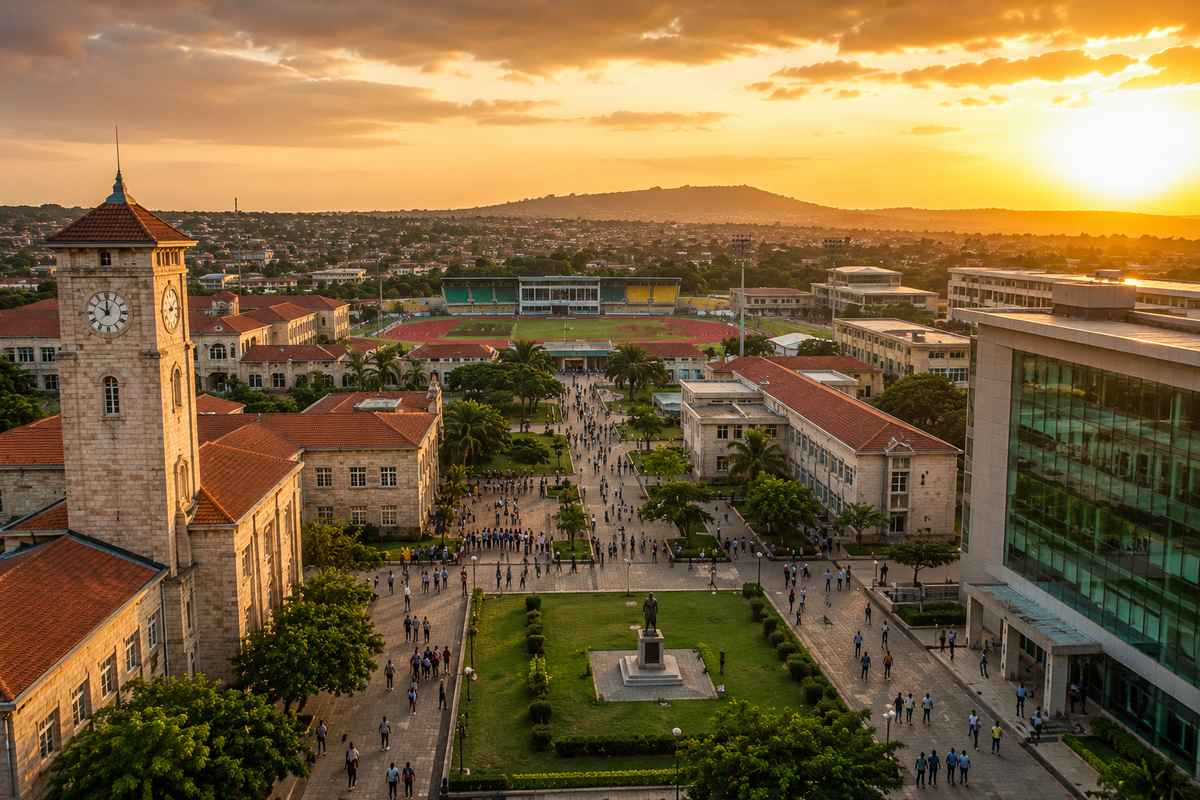
The same principle applies with equal force across Nigeria, Ghana, and Ivory Coast, even though the institutional history and scale look different in each market. Universities across all three countries already carry the two ingredients that matter most: a fixed physical home that is not going anywhere, and a community of students, staff, and alumni who already feel some baseline connection to the institution before a single match is ever played. What has historically been missing is not institutional weight. It is a structure capable of organizing what that institutional weight already makes possible, turning campus pride that already exists into a competitive framework that channels it somewhere specific, consistent, and visible.
This is precisely the gap HiFL addressed inside Nigerian university football, and precisely the gap HiSL is built to address at a larger scale, across more institutions and more sports. The universities were never the missing ingredient. The organising structure around them was.
There is also a developmental argument for institutional anchoring that goes beyond simple permanence. A university is not just a stable venue, it is an environment already built around structured growth. Academic calendars, residential life, mentorship networks, and campus governance all already exist to guide young people through a defined multi-year period of development. Athletics that plug into that existing structure inherit some of its discipline almost automatically. A student-athlete training within a university system is simultaneously inside an academic support structure, a peer community, and often a pastoral care network, three layers of support that a purely commercial youth academy would have to build from scratch and fund independently.
This is part of why the institutional pillar tends to be undervalued by people encountering a market for the first time. It is easy to see the absence of a stadium, a broadcast deal, or a sponsorship portfolio and conclude that a sporting ecosystem is starting from zero. It is much harder to see, from the outside, that the institutional scaffolding, the actual hardest and slowest part to build, has already been standing for decades. Nigeria’s universities, Ghana’s universities, and Ivory Coast’s universities were not waiting for someone to invent their sense of institutional identity. They were waiting for someone to connect that identity to a structured competitive framework worthy of it.
Competition as Infrastructure
If institutions are the foundation, competition is the infrastructure built on top of it, and it deserves to be thought of in exactly those engineering terms. Infrastructure is not decorative. It is the thing that makes everything else functional. A university with a stadium and a proud alumni base but no consistent, well-organised competition to fill that stadium is a building without plumbing. Impressive to look at, structurally unable to do the job it was built for.
Consistent competition does several things simultaneously that no single alternative can replicate. It gives athletes a reason to train with intensity across an entire season rather than for isolated, unpredictable fixtures. It gives fans a calendar they can plan around, which is the single most underrated ingredient in building a sustained following, since sporadic events cannot build the habit that regular ones can. It gives scouts, investors, and media partners a reliable product they can actually build a relationship with over time, rather than a one-off spectacle they have to rediscover from scratch each year.
This is the part of ecosystem-building that is easiest to underestimate, precisely because a well-run competition looks effortless from the outside. Nobody watching a smoothly officiated match with a settled fixture list thinks about how much deliberate structure sits underneath it. But remove that structure, replace it with ad hoc, inconsistently scheduled matches, and the entire ecosystem built on top of it starts to wobble almost immediately. Athletes lose the rhythm that builds real development. Fans lose the calendar that builds real habits. Investors lose the track record that builds real confidence.
A university sports ecosystem across Nigeria, Ghana, or Ivory Coast is only as strong as the competition running through its center. Everything else, the institutional pride, the community identity, the commercial interest, depends on that competitive infrastructure holding steady, season after season, without interruption. It is the least glamorous pillar of the four, and it is also the one that everything else quietly depends on.
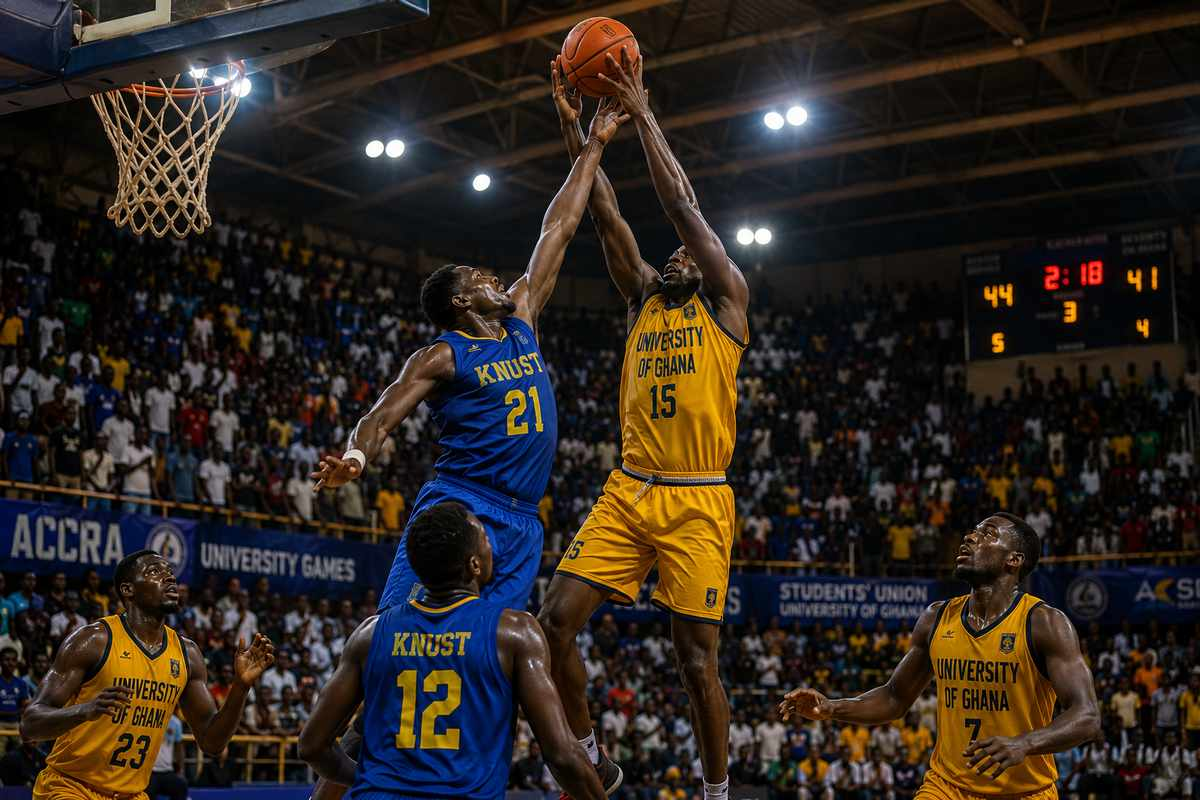
Consider what happens when that infrastructure is missing rather than present. A talented university team with no consistent opposition, no settled calendar, and no reliable officiating cannot build a season narrative at all, only a scattered handful of isolated results with no throughline connecting them. Fans cannot follow a story that does not exist yet. Investors cannot underwrite a product that has no predictable delivery schedule. Broadcasters cannot plan production resources around fixtures that might or might not happen on a given weekend. Every downstream pillar of the ecosystem inherits the instability of the competition sitting underneath it, whether or not anyone involved realises that is the actual root cause.
This is also where the difference between organised competition and mere participation becomes most visible. Plenty of students across Nigeria, Ghana, and Ivory Coast already play organised matches of some kind, informally arranged between departments or hostels, refereed by whoever happens to be available, recorded nowhere beyond memory. That is participation, and participation has real value in its own right. It is not the same thing as infrastructure. Infrastructure requires a season that is planned in advance, rules that are applied consistently regardless of which institution is playing, and a competitive tier system that gives every match a context inside a larger, ongoing narrative. That is the layer HiFL built inside Nigerian university football, and it is the layer HiSL is built to extend across every pilot market and every sport it touches.
Community and Identity
If institutions provide the foundation and competition provides the infrastructure, community is what gives the entire structure a reason to matter to anyone beyond the athletes directly involved. A sporting ecosystem without community is simply a schedule. It is a community that turns a schedule into something people organise their identity around.
This is where university sport holds an advantage that professional sport, for all its resources, has always struggled to fully replicate. A professional club’s fans choose that club, usually for reasons layered in family history, geography, or simple preference. A university’s community already exists before the first ball is kicked. Students are already there. Alumni already carry the institution’s name with them, sometimes for the rest of their lives, long after graduation, across whatever city or country their careers eventually take them to. Staff, families, and the surrounding neighbourhood already have some baseline connection to the campus. Sport does not need to create that community from nothing. It needs to give an already-existing community somewhere to direct its energy.
Few people have described what that kind of shared sporting experience can do for a community more powerfully than Nelson Mandela, speaking at the Laureus World Sports Awards about sport’s ability to bring people together across every line that might otherwise divide them.
|
“It has the power to unite people in a way that little else does.” — Nelson Mandela, 2000 Laureus World Sports Awards |
That unifying power is not an abstract sentiment. It shows up in very concrete ways inside a functioning university sports ecosystem. It shows up in the alumni who have not set foot on campus in fifteen years but still know the current season’s results. It shows up in the student who arrives at a new university, knowing nobody, and finds a version of belonging in the stands before finding it anywhere else. It shows up in rivalry fixtures that families attend together across generations, the kind of occasion where the result matters less, eventually, than the fact that everyone was there together.
Across Nigeria, Ghana, and Ivory Coast, that raw material for the community is not something that needs to be manufactured. University culture across all three countries already carries deep loyalty, strong regional identity, and a natural appetite for shared occasion. What has been missing is a consistent structure capable of channeling that existing loyalty into something that repeats, grows, and compounds season after season, rather than surfacing only around isolated, unstructured events. Community, like institutional weight, was never the scarce ingredient. The organising structure around it was.
Community also does something for a sporting ecosystem that no amount of marketing spend can substitute for: it makes the ecosystem self-renewing. Every graduating class hands its loyalty down to the next intake, sometimes deliberately, through mentorship and campus tradition, and sometimes simply through proximity and repetition, watching an older student’s enthusiasm for a fixture rub off before anyone consciously decides to inherit it. Alumni who move into positions of influence, in business, in government, in media, carry their university’s sporting identity with them into rooms the university itself might never otherwise reach, creating exactly the kind of organic advocacy that no paid campaign can fully replicate.
This is also where corridor derbies and heritage fixtures do their most important work. A rivalry occasion between two institutions with genuine, longstanding regional or historical texture behind it draws attention that a neutral fixture between two unfamiliar teams simply cannot generate on its own merits, no matter how well either team is playing that particular season. The rivalry becomes a container the wider community can pour its identity into, year after year, regardless of which side happens to be favoured heading into kickoff. Building a calendar around occasions like this, rather than treating every fixture as commercially and culturally interchangeable, is part of what separates an ecosystem with real community gravity from a schedule that simply happens to repeat.
Commercial Sustainability
It would be easy to end this discussion at community, since community is the pillar that carries the most emotional weight. But an ecosystem that cannot sustain itself financially, no matter how strong its institutions, its competition, or its community, will eventually stop functioning. Commercial activity is not the reason a great university sports ecosystem exists. It is the mechanism that keeps it standing long enough to matter.
The order of that sentence is deliberate, and it is worth being precise about it. Sponsorship, media rights, and matchday revenue are supporting pillars, not primary objectives. An ecosystem built primarily to generate commercial return, with competition and community treated as secondary features wrapped around that objective, rarely survives contact with its own community, because the audience can always tell when they are the product being sold rather than the people being served. An ecosystem built around genuine competition and genuine community, with commercial activity supporting that foundation rather than replacing it, tends to attract commercial partners naturally, because brands want proximity to something real.
FIFA President Gianni Infantino, addressing the scale of football’s global commercial engine at the Milken Institute Global Conference, was direct about where that revenue is ultimately required to go.
|
“The revenues that we generate are reinvested in the game all over the world.” — Gianni Infantino, President, FIFA |
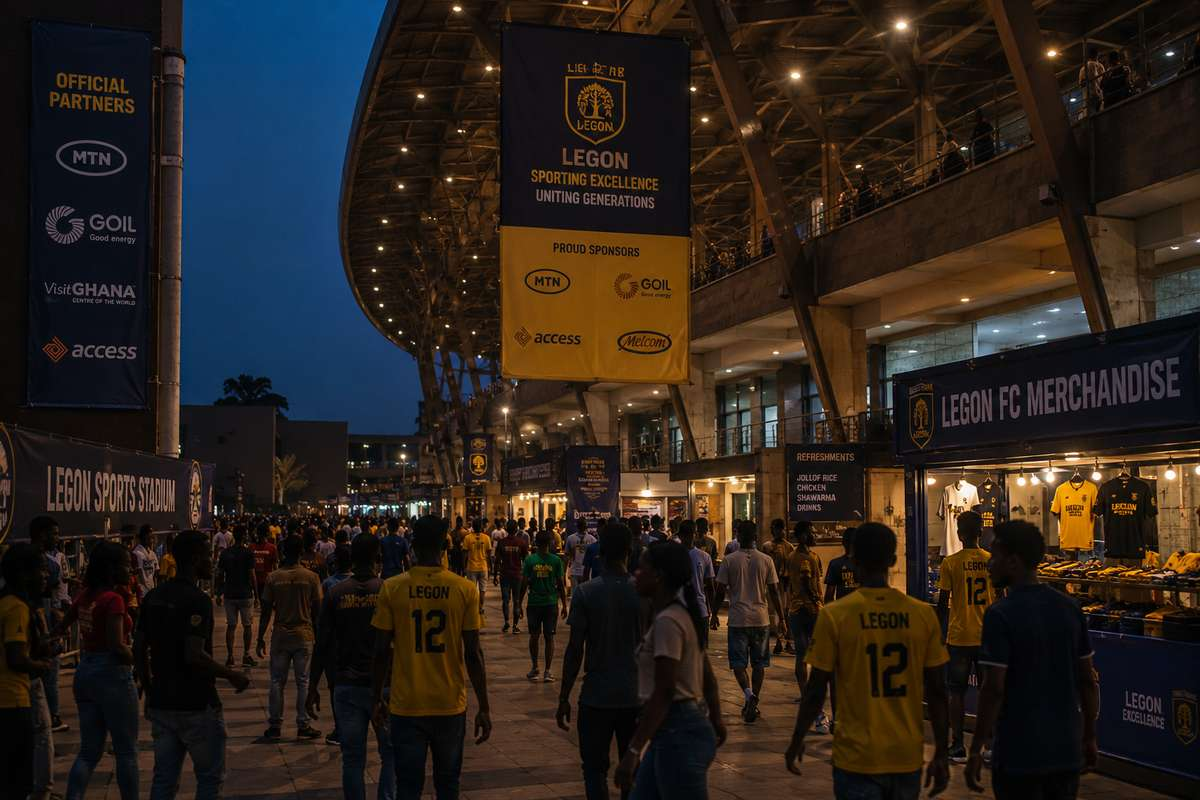
For West African university sport specifically, this means sponsorship and revenue generation exist to fund better competition, better facilities, better documentation, and a stronger, more sustained community experience, not the other way around. Founding Partner and Campus Activation Partner positions are structured with exactly this sequencing in mind: category-exclusive, closing when filled, designed to align genuine commercial partners with an ecosystem that is building something real, rather than renting attention for a single activation and disappearing once the novelty fades.
A great university sports ecosystem never asks its community to exist for the sake of its sponsors. It asks its sponsors to invest in something a community was already going to care about regardless, and lets that authenticity do more commercial work than any amount of forced messaging ever could.
There is also a practical sequencing argument here that matters as much as the philosophical one. Commercial partners, particularly the pan-African brands most likely to invest seriously in West African university sport, are increasingly sophisticated about what they are buying. A sponsorship attached to a genuinely well-run competition, with a real community behind it and documented audience engagement to show for it, carries a fundamentally different risk profile than a sponsorship attached to a one-off activation with no underlying structure to sustain it beyond a single matchday. The commercially sustainable ecosystems are, almost without exception, the ones that built the other three pillars first and let the commercial pillar arrive as a consequence of that foundation rather than as a shortcut around it.
This sequencing also protects the long-term value of commercial positions themselves. A Founding Partner or Campus Activation Partner attaching their brand to an ecosystem still finding its footing takes on real uncertainty about what that association will be worth in three or five years. A partner attaching their brand to an ecosystem where the institutional, competitive, and community pillars are already functioning is buying into something with a far clearer trajectory, and category exclusivity in that kind of environment becomes considerably more valuable with every season that trajectory continues.
Where the Four Pillars Meet
None of these four pillars functions particularly well in isolation. An institution without competition is just a campus with empty facilities. Competition without community is just a fixture list nobody attends. Community without commercial sustainability eventually runs out of resources to keep the lights on. Commercial activity without the other three is not an ecosystem at all, just a series of transactions wearing a jersey.
What makes an ecosystem great is not the presence of any single pillar in isolation. It is the way all four reinforce each other simultaneously, institutions providing permanence, competition providing structure, community providing meaning, and commercial activity providing the fuel that keeps the whole system running long enough for the first three to compound in value over years rather than fading after a single promising season.
Nigeria, Ghana, and Ivory Coast already have the institutions. They already have the community. What has been missing, consistently, across university sport in all three markets, is the connective structure capable of holding all four pillars together at once, in a way that compounds rather than resets every season. That is the specific gap HiFL demonstrated could be closed inside Nigerian university football. It is the same gap HiSL is now built to close at a larger scale, across more countries and more sports, with all four pillars treated as equally essential from the outset rather than bolted on in whatever order convenience allows.
Build the Ecosystem With Us
Strong ecosystems create opportunities for everyone involved, the athletes competing inside them, the institutions anchoring them, the communities rallying around them, and the partners investing in their long-term future. Follow HiSL as we continue exploring what it takes to build them. If your brand wants the last available activation position at the season’s commercial peak, contact partnerships@hislglobal.com before positions close.