The Ivory Coast Opportunity: Why Francophone West Africa Matters
Ivory Coast occupies a unique position within African sport. It combines strong sporting traditions, growing international visibility, and an increasingly influential role within the broader West African region, a combination few countries on the continent can claim in equal measure. Nigeria carries the demographic scale. Ghana carries the decades-long footballing pedigree. Ivory Coast carries something distinct from both: a football culture currently operating at the very top of the continental game, an economy that anchors an entire regional currency union, and a linguistic and institutional identity that opens a door into a part of West Africa English-speaking platforms rarely reach with any real depth; all these are what HiSL was built for.
That last point deserves more attention than it typically gets in conversations about West African sport, which tend to default to an Anglophone frame simply because so much of the region’s football media happens to be produced in English. Ivory Coast is not a variation on Nigeria or Ghana’s story told in French. It is its own story, with its own recent triumphs, its own university sector, and its own strategic weight across a bloc of nations that shares far more than a border with the country at its economic centre.
It is worth being precise about why that distinction matters practically, and not just symbolically. A platform that only ever proves itself in English-speaking markets has, in effect, only tested half its own thesis. West Africa’s Francophone countries, Benin, Burkina Faso, Mali, Niger, Senegal, and Togo alongside Ivory Coast itself, represent a population, an economy, and a sporting culture at least as significant as the region’s Anglophone half, and one considerably less served by the sports media, scouting networks, and commercial infrastructure that already operate, however imperfectly, across Nigeria and Ghana. Ivory Coast is where that gap is most visible, and where closing it matters most.
The Country’s Sporting Identity
Football in Ivory Coast is not simply popular. It is a central thread in how the country understands itself on the global stage, and the evidence for that is neither historical nor abstract. It is recent, specific, and still being talked about in Abidjan today.
In February 2024, Ivory Coast won the Africa Cup of Nations on home soil, its third continental title, in a final remembered as much for its drama as its result. The hosts had barely survived the group stage, including a 4-0 defeat to Equatorial Guinea that led to the mid-tournament dismissal of their head coach, before assistant Emerse Fae took interim charge and guided the team through a penalty shootout win over defending champions Senegal, an extra-time victory over Mali, and a hard-fought semi-final win against DR Congo. In the final, Ivory Coast came from behind against Nigeria, Franck Kessié heading in an equaliser before Sébastien Haller, who had returned to professional football after treating testicular cancer, scored the winning goal in the 81st minute.
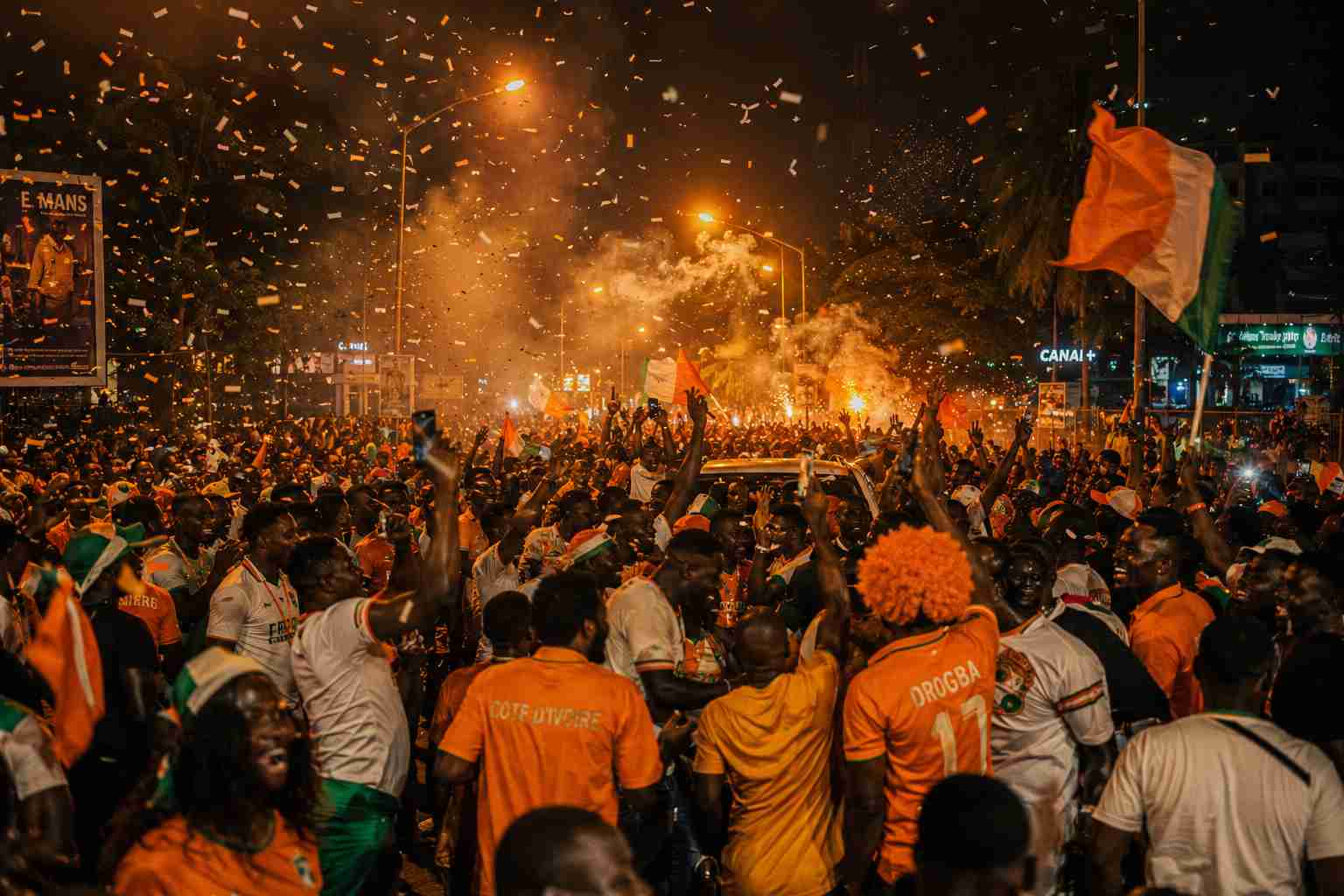
A team nearly eliminated in its own group stage went on to become African champions in its own stadium. That is not a footnote in Ivorian football history. It is the headline.
What makes that title particularly relevant to a university sport argument is how the squad that won it was built. Several of the players involved in that 2023 campaign came through European academy systems having left Ivory Coast as teenagers, discovered by scouts operating informal networks rather than any structured domestic pathway. The team that delivered Ivory Coast’s proudest recent football moment was, in a very real sense, assembled by an international scouting apparatus operating almost entirely outside any Ivorian institutional structure. That should prompt real questions about how many similarly talented players, spotted a year too late or never spotted at all, never had the chance to be part of that story.
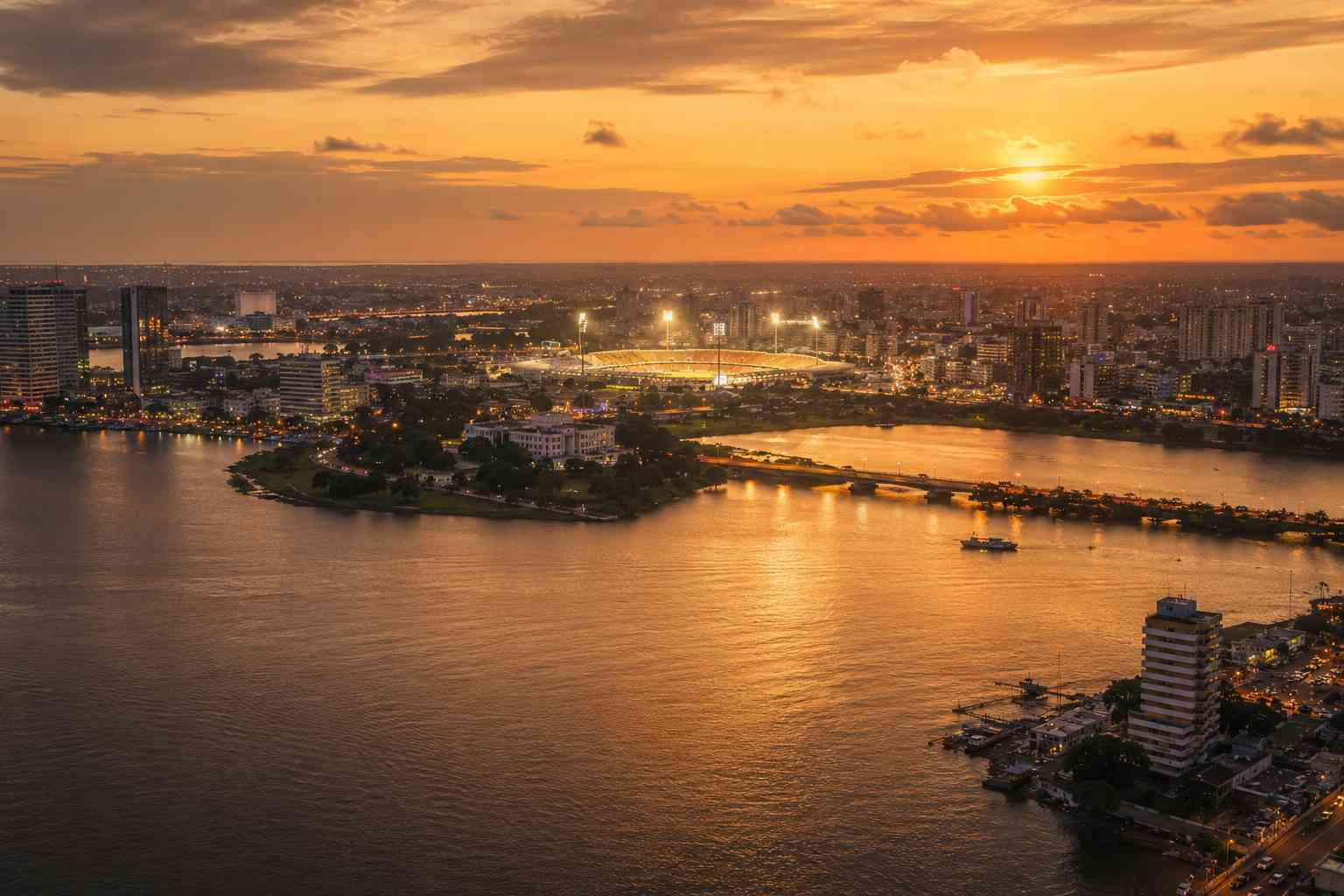
The stadium where that final was played tells its own part of this story. Alassane Ouattara Stadium, a 60,000-seat venue jointly funded by the Ivorian and Chinese governments and opened in 2020, was not built as a single-purpose football venue. It also hosts rugby and athletics events, a detail easy to overlook amid the drama of a title-winning final, but one that speaks directly to the kind of multi-sport infrastructure already sitting inside Ivory Coast’s largest sporting venues, built and ready, waiting for a structured competitive calendar substantial enough to use it year-round rather than only during major tournaments.
Ivory Coast’s footballing identity was also shaped, long before this generation’s success, by Didier Drogba, whose career at Chelsea made him one of the most recognised African footballers of his generation and whose public appeals during Ivory Coast’s civil conflict in the mid-2000s are still referenced today as a rare example of a footballer’s public standing intersecting directly with national politics. Drogba’s continued presence in Ivorian football’s public life, including co-hosting the official draw for the 2023 Africa Cup of Nations his country went on to win, reflects a sporting culture that treats its football history as a living, active part of national identity rather than a closed chapter.
That lineage from Drogba’s generation to the current one is not incidental to this piece’s argument, it is central to it. A country capable of producing a global icon of Drogba’s stature once, and a World Cup-calibre generation built around Diallo, Kessié, and Fofana barely a decade later, is not a country whose football success depends on a single golden generation. It is a country with a talent pipeline that keeps producing at an elite level across multiple generations, using channels, foreign academy scouting, individual club pathways, family connections, that remain almost entirely informal at the domestic level. The consistency of Ivorian football’s output, across two distinct generations of world-class players, is itself the strongest possible argument that the underlying talent base has never been the limiting factor.
The World Cup Spotlight
Ivory Coast carried that momentum directly into the 2026 FIFA World Cup, arriving in North America with more raw talent value than any other African squad in the tournament. Transfermarkt valued the Ivorian squad at €522.1 million, the highest of any African nation competing, built around Amad Diallo’s emergence as one of Manchester United’s most important attacking players, Franck Kessié’s 105 international caps of leadership, and Seko Fofana’s midfield authority.
That tournament ended earlier than the squad’s valuation might have suggested, a 2-1 Round of 32 loss to Norway on 30 June, a defeat against a well-organised European side rather than a collapse against a clearly superior opponent. Amad Diallo himself scored Ivory Coast’s goal, a 74th-minute equaliser that briefly levelled the match before Erling Haaland’s 86th-minute winner sent Norway through, fitting testimony to a player capable of carrying a match almost single-handedly, exactly the kind of individual moment this piece keeps returning to. The gap between Ivory Coast’s individual talent value and its tournament outcome mirrors a pattern this platform has examined across the region: extraordinary individual ability, developed largely through European club academies once a player is discovered, without the same structural depth feeding that talent from within the country’s own domestic and university sport ecosystem before a European club ever sees it.
The scale of international attention that comes with fielding the continent’s most valuable squad is, in itself, a meaningful commercial signal. Brands, broadcasters, and scouts calibrating their African football strategy around this World Cup cycle are, by necessity, paying closer attention to Ivory Coast than they have in previous tournaments, precisely the kind of attention a properly organised university sport platform can convert into sustained, season-long engagement rather than a spotlight that fades once a single tournament ends.
There is a specific lesson in how Amad Diallo’s own path to prominence unfolded that speaks directly to the argument this piece is building. Diallo was identified by Atalanta’s scouting network in his mid-teens, developed through Italian and then English club academy systems, and reached Manchester United and full international recognition entirely outside any Ivorian domestic development structure. That is not a criticism of how his career happened, it worked, spectacularly. It is an observation about how much value left the country the moment he was discovered, and how little of his development, or the commercial and developmental data generated along the way, ever passed through an Ivorian institution capable of capturing it. A university sport structure does not compete with that pathway. It exists for the players who look exactly like a young Amad Diallo but who a European scout has not yet found, giving them a documented, visible alternative route rather than leaving their visibility entirely to chance.
The University Ecosystem Opportunity
Université Félix Houphouët-Boigny in Abidjan’s Cocody district is the largest university in Ivory Coast, enrolling more than 60,000 students across thirteen faculties, and it is exactly the kind of institution a serious university sport platform is built around: large enough to sustain a real competitive programme, established enough to carry institutional credibility, and situated inside the country’s economic and cultural capital. It is one of several major public universities across Abidjan and secondary cities including Bouaké and Daloa, part of a tertiary education sector that has expanded substantially over the past decade as the country has invested in rebuilding and modernising its higher education infrastructure.
What that university system has not yet received is the same structured sport layer that HiFL demonstrated works in Nigeria between 2018 and 2023, real competition, properly documented, connecting university-age athletes to professional pathways through a season-long calendar rather than informal or occasional matches. Ivory Coast’s football culture already produces the raw material, players discovered young, developed largely overseas once identified, and international recognition that peaks during major tournaments. What is missing is the domestic, university-level structure that gives the athletes who are not discovered at fifteen, the ones playing on campuses in Cocody, Bouaké, and Daloa, the same documented pathway toward visibility that HiFL built for their Nigerian counterparts.
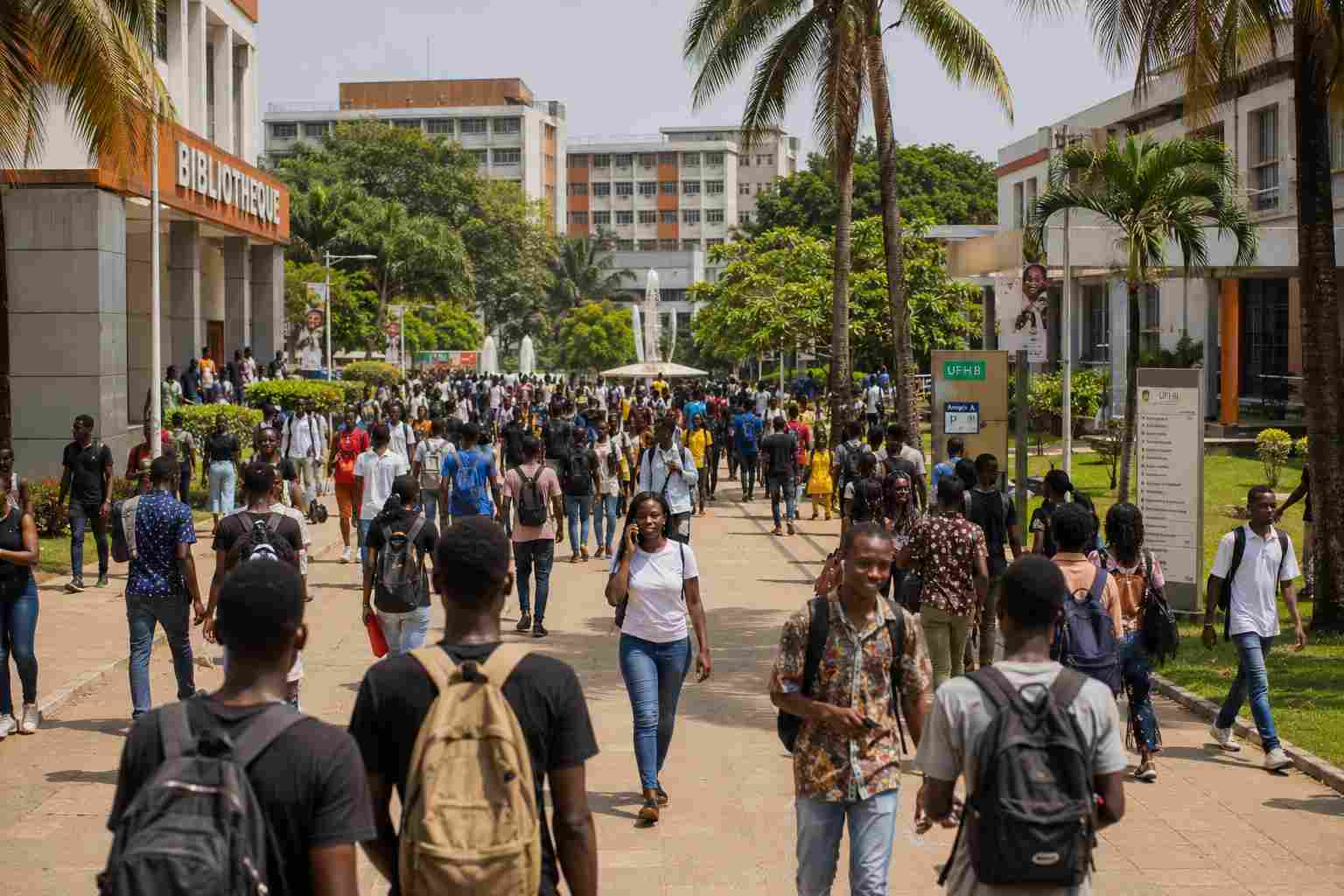
The scale of Université Félix Houphouët-Boigny alone illustrates how much untapped structure already exists. A single institution enrolling more than 60,000 students, with sports facilities already built into its campus infrastructure, is larger than the total student population of many national university systems elsewhere on the continent. Organising even a portion of that population into a documented, season-long football competition would immediately create one of the largest structured university sport environments in West Africa, without requiring a single new building or a single new institutional relationship to be formed from nothing. The infrastructure question, in Ivory Coast’s case, is less about building capacity than about organising capacity that already exists.
The next Amad Diallo may already be playing on a university pitch in Abidjan. Without a structure built to notice him, nobody will know until a European club finds out first.
This is also where Ivory Coast’s multi-sport potential becomes relevant beyond football specifically. A stadium built to host rugby and athletics alongside football, the same Alassane Ouattara Stadium that hosted the 2023 AFCON final, is physical evidence that Ivory Coast’s sporting infrastructure was never designed around football exclusively. A university sport platform organised across multiple disciplines, the same model HiSL has built in Nigeria and Ghana, extends naturally into an Ivorian sporting culture that has already shown, through its own infrastructure choices, that it thinks about sport as an ecosystem rather than a single competition.
Why Francophone West Africa Matters
Ivory Coast’s importance to HiSL’s three-market pilot extends well beyond its own borders, because Ivory Coast does not sit at the edge of Francophone West Africa. It sits at its economic centre. The country anchors the West African Economic and Monetary Union, the eight-nation bloc that shares the CFA franc as a common currency alongside Benin, Burkina Faso, Guinea-Bissau, Mali, Niger, Senegal, and Togo. Ivory Coast alone accounts for roughly 40 percent of the union’s total economic output, by some distance the largest economy inside a currency bloc that spans a substantial share of West Africa’s landmass and population.
That economic weight matters to a sports platform for a reason that has nothing to do with football directly. A commercial or broadcast relationship built successfully inside Ivory Coast does not stay contained within Ivory Coast’s borders in the way a similar relationship might in a market without the same regional financial architecture around it. Sponsors, broadcasters, and institutional partners operating across UEMOA’s shared currency and regulatory space already think in regional terms when they evaluate Ivorian opportunities, because the country’s economic gravity naturally pulls attention from across the bloc.
That regional gravity extends into sport in ways that are easy to underestimate from outside the region. A telecoms or fintech brand headquartered in Abidjan, operating across UEMOA’s shared regulatory and currency environment, is often already structured to think about marketing campaigns at a bloc-wide level rather than a single-country one, simply because that is how much of their own commercial infrastructure is built. A properly organised university sport platform based in Ivory Coast is a natural fit for exactly that kind of regionally-minded commercial partner, offering a single relationship with genuine reach across a currency union rather than a single national audience.
Nigeria and Ghana share an Anglophone institutional and football culture, common language, overlapping media markets, and similar governance structures inherited from British colonial administration. Ivory Coast represents a genuinely different linguistic and administrative environment, one built on French colonial and institutional inheritance, different regulatory frameworks, different media consumption habits, and a different set of governing relationships across sport and education. Proving that organised collegiate sport works as effectively in that environment as it does in Nigeria and Ghana demonstrates something considerably more valuable than three successful, isolated markets. It demonstrates that the model itself, not merely its Anglophone application, is what is actually working, a claim with real weight behind it precisely because Ivory Coast tests that claim under genuinely different conditions rather than a variation of the same ones.
Three markets that only worked in one language would prove a formula. Three markets that work across two prove a platform.
That distinction is precisely why Ivory Coast’s role in HiSL’s pilot is not a matter of regional completeness for its own sake. It is a genuine test of whether the underlying thesis, demographic scale, university sector growth, football culture, and structured competition converting talent into visibility, holds up outside the linguistic and institutional conditions where it was first proven. Ivory Coast’s football pedigree, its economic centrality to Francophone West Africa, and its own substantial, still-underdeveloped university sport ecosystem make it the market where that test matters most.
None of that requires Ivory Coast to replicate Nigeria’s or Ghana’s path exactly. Different regulatory environments, different language of instruction across universities, different broadcast and sponsorship relationships, all of it means the specific implementation will look different in Abidjan than it does in Lagos or Accra. What should not differ is the underlying seriousness of the structure itself, the same documented competition, the same season-long calendar, the same commitment to converting talent into visibility that has already proven itself in Nigeria and is being built in Ghana. Ivory Coast is not a market that needs to be convinced its football culture matters. It is a market whose recent history, an AFCON title won at home, a World Cup squad valued higher than any other African nation’s, has already made that case more emphatically than most countries ever get the chance to.
Follow The Opportunity
The future of university sport in West Africa will be shaped by collaboration across languages, cultures, and borders. Follow HiSL as we continue exploring that opportunity.
Institutions, governing bodies, and commercial partners who want to understand what HiSL’s platform means for their context should contact the HiSL partnerships team at partnerships@hislglobal.com or visit hislglobal.com/partners.