Why Investors Are Paying Attention to African Sports Infrastructure
For years, conversations about African sport focused primarily on athletes. The next breakout striker. The sprinter who might medal. The point guard a scout flagged after a single viral clip. Increasingly, investors are paying attention to something else entirely: the systems, platforms, and infrastructure that support those athletes, the part of the story that rarely trends but is where the actual commercial value tends to accumulate, the part where HiSL is built for.

That shift in attention is not sentiment. It is arithmetic. An athlete is a single asset, brilliant but singular, subject to injury, form, and the unpredictability of any one career. Infrastructure, a properly organised competition, a documented development pipeline, a broadcast-ready content calendar, an institutional network built to sustain all of it season after season, is a different kind of asset entirely. It compounds. It survives the retirement of any individual star. And across West Africa specifically, the conditions for that kind of infrastructure to generate real returns are converging in a way that a growing number of investors are no longer willing to ignore.
It is worth being specific about what kind of investor this piece is actually describing, because the word covers a wide range of appetite and time horizon. This is not primarily a story about a private equity fund looking for a three-year exit on a single club’s transfer market gains. It is a story about development finance institutions, sovereign wealth vehicles, and patient infrastructure capital, the kind of money that has already found its way into African telecoms towers, toll roads, and fibre networks, starting to ask whether sport belongs in that same portfolio category. That is a fundamentally different question than whether a given footballer is worth signing, and it is the question this piece is built to answer.
The Demographic Story
Every investment thesis about African sport eventually has to reckon with the same underlying number. The World Bank‘s demographic projections place Sub-Saharan Africa’s under-25 population above 750 million by 2030, a figure with no real precedent anywhere else on earth. United Nations population data reinforces the same picture from a different angle: Africa is the only region where the working-age population is still expanding rapidly enough to reshape global consumer markets for decades to come, not years.
That number matters to a sports investor for a specific reason that has nothing to do with football itself. A youth population of that scale is also a consumer population of that scale, one entering its prime spending years at precisely the moment digital infrastructure across the region is making that spending trackable, targetable, and monetisable in ways it never was for the generation before it. GSMA’s connectivity data shows mobile internet penetration continuing to climb across West Africa’s youth demographic specifically, the same audience that fills university lecture halls, football stands, and increasingly, basketball arenas and university athletics tracks.
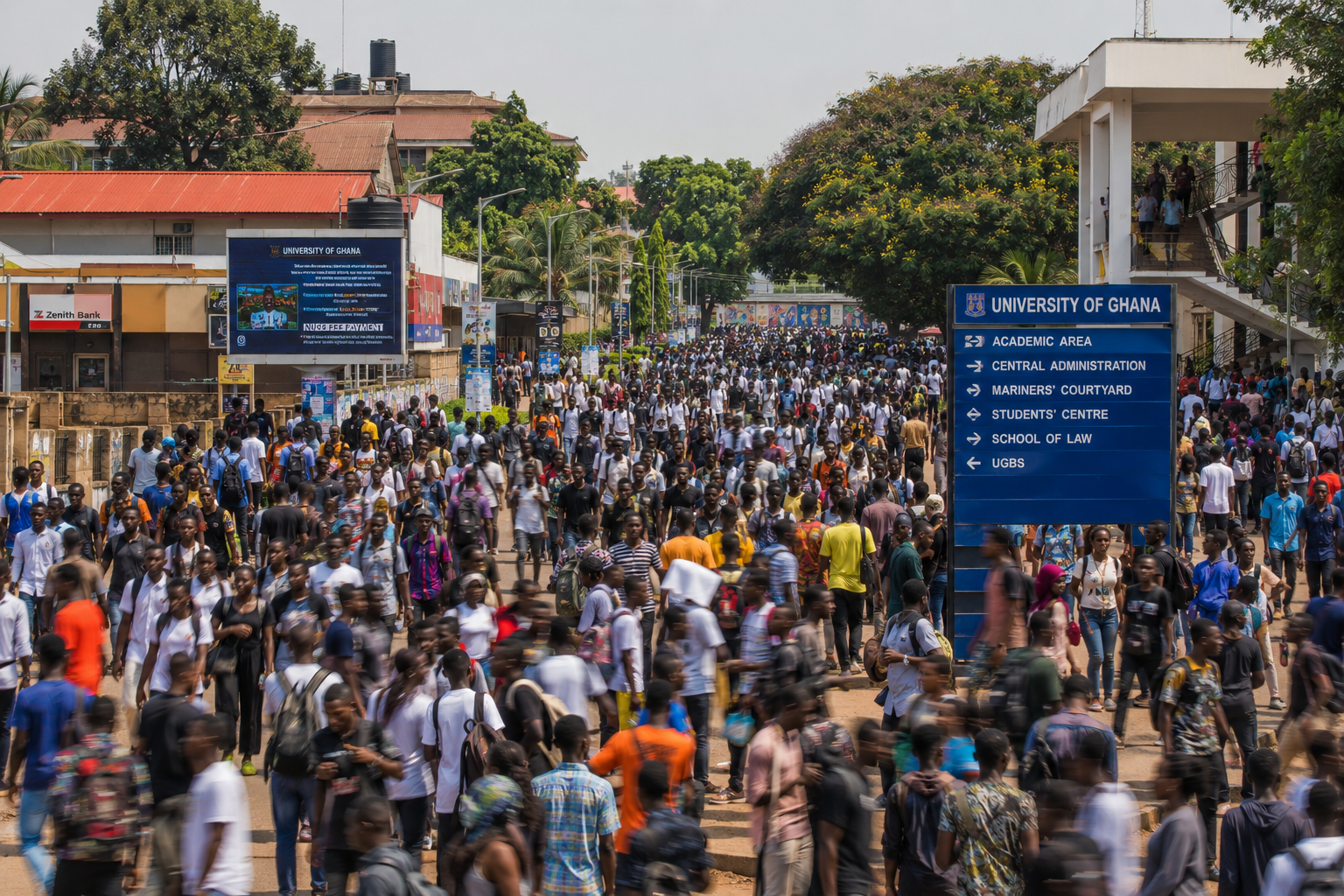
University enrollment sits directly inside that demographic wave. UNESCO’s Global Education Monitoring Report measures higher education growth across Sub-Saharan Africa at more than 300 percent over the past two decades, a rate unmatched anywhere else in the world. Nigeria alone counts more than 170 accredited universities. Ghana and Ivory Coast have both expanded their tertiary sectors steadily across the same period. That is not a population investors need to imagine reaching in ten years. It is a population already assembled, on campuses, in cities, inside a demographic curve that keeps bending upward.
Compare that trajectory to the demographic story most global sports capital has spent the past decade chasing. Much of the private equity and sovereign wealth interest that has flowed into European football, American professional leagues, and Gulf sports infrastructure over the last ten years has been chasing audiences that are, demographically speaking, flat or aging. West Africa’s university-age population is doing the opposite, expanding every single year, in markets where sports consumption habits are still being formed rather than already saturated. That distinction, growing audience versus mature one, is precisely the kind of asymmetry patient capital is trained to look for.
A youth population this large is not a future market. It is a present one that infrastructure has not yet caught up to.
None of this is a projection that requires a decade to validate. Every one of these figures describes conditions that already exist today, in 2026, not a forecast contingent on trends holding steady for years to come. That distinction matters enormously to how patient capital evaluates timing. A demographic thesis dependent on population growth materialising on schedule carries real execution risk. A demographic thesis built on a population that has already arrived, is already enrolled in university, and is already consuming sport digitally at scale carries a fundamentally different, much lower order of risk.
The Sports Economy Story
Global capital’s interest in sport as an asset class is not a new story, but its scale has changed meaningfully in the past two years. PwC’s sports industry research places the global sports market at roughly $600 billion, projecting continued growth through 2026 across ticketing, sponsorship, and media rights even as traditional broadcast revenue growth slows. Deloitte’s 2026 Sports Industry Outlook identifies private capital’s expanding role in scaling sports ownership models as one of the defining trends of the year, a shift that has already reshaped European football club ownership and is now extending into earlier-stage, higher-growth markets.
That extension into earlier-stage markets is precisely where West Africa’s opportunity sits. Most of the capital currently flowing into sport globally is competing for the same small number of established, already-expensive assets, top-flight European clubs, major American franchises, marquee global events. That competition compresses returns. A market where the underlying demographic and cultural conditions are this strong, but where organised commercial infrastructure is still being built rather than already priced to perfection, is exactly the kind of asymmetry that patient, early-stage infrastructure capital is designed to capture.
Africa’s share of that global capital story remains small relative to the size of its population and its football culture, which is precisely the argument for paying attention now rather than later. FIFA’s own reinvestment of 2026 World Cup revenue across its 211 member associations, part of an $11 billion economic footprint confirmed by FIFA president Gianni Infantino, reflects an organisation increasingly treating African markets as growth engines rather than peripheral beneficiaries. WARC’s analysis of the same tournament’s advertising market places Africa among the regions with the highest viewing intensity per capita globally, evidence that audience attention, the raw material any sports investment ultimately depends on, is already there in scale.
Ghana’s own university sport ecosystem offered a striking, entirely organic piece of evidence for that underlying quality in 2025. The University for Development Studies became the first African university ever to win the FISU World University Football Cup, defeating Brazil’s Paulista University 2-1 in extra time in the final in Dalian, China. That win happened entirely outside any commercial platform’s involvement, through Ghana’s own domestic university sport structure, and it is exactly the kind of result that should reframe how seriously international observers take West African university football specifically. A university system capable of producing a genuine world champion, without the benefit of the kind of structured commercial ecosystem HiSL is built to provide, is a system with considerably more underlying quality than its current level of investment reflects.
A World University Cup did not need a commercial platform to happen. It needed a platform to be seen, tracked, and built upon. That is the gap.
It is worth sitting with how little infrastructure surrounded that achievement. There was no dedicated broadcast package following the team’s run through the tournament in real time for a domestic audience. No structured commercial partnership captured the moment’s attention for anything beyond a news cycle. No systematic pathway existed to connect the individual players on that squad to the next stage of their footballing or educational careers beyond the goodwill of a presidential reception. The talent produced a genuine global result. The infrastructure around that talent captured almost none of the value the result actually created, commercially, developmentally, or in terms of the data that a properly organised system would have generated about every player on that pitch.
Why Infrastructure Matters
Ghana’s football media landscape is a useful, concrete illustration of why infrastructure, specifically, is the layer investors are increasingly focused on rather than talent alone. The Ghana Football Association’s broadcast contract with StarTimes expired at the end of the 2023-24 season, and the two parties formally ended renewal negotiations in 2025 over an outstanding debt the GFA has pursued through legal channels. In the period since, domestic broadcast rights have moved through more than one arrangement, from GTV Sports+ to a new agreement for the 2025-26 season, evidence of a genuinely active, still-settling media market rather than a static or resolved one.
That kind of transition is not, by itself, a crisis. It is a signal. A market actively rethinking how its football gets produced, distributed, and monetised is a market where a new entrant with a clear content calendar, documented competition, and a structured commercial model has a genuine opening, not because the old system failed, but because the system is already in motion and looking for what comes next. A collegiate sports platform entering that environment is not trying to displace an established broadcast relationship. It is offering something that market currently lacks: a full season of organised, storyline-driven, broadcastable competition built specifically for a digital-first, university-aged audience.
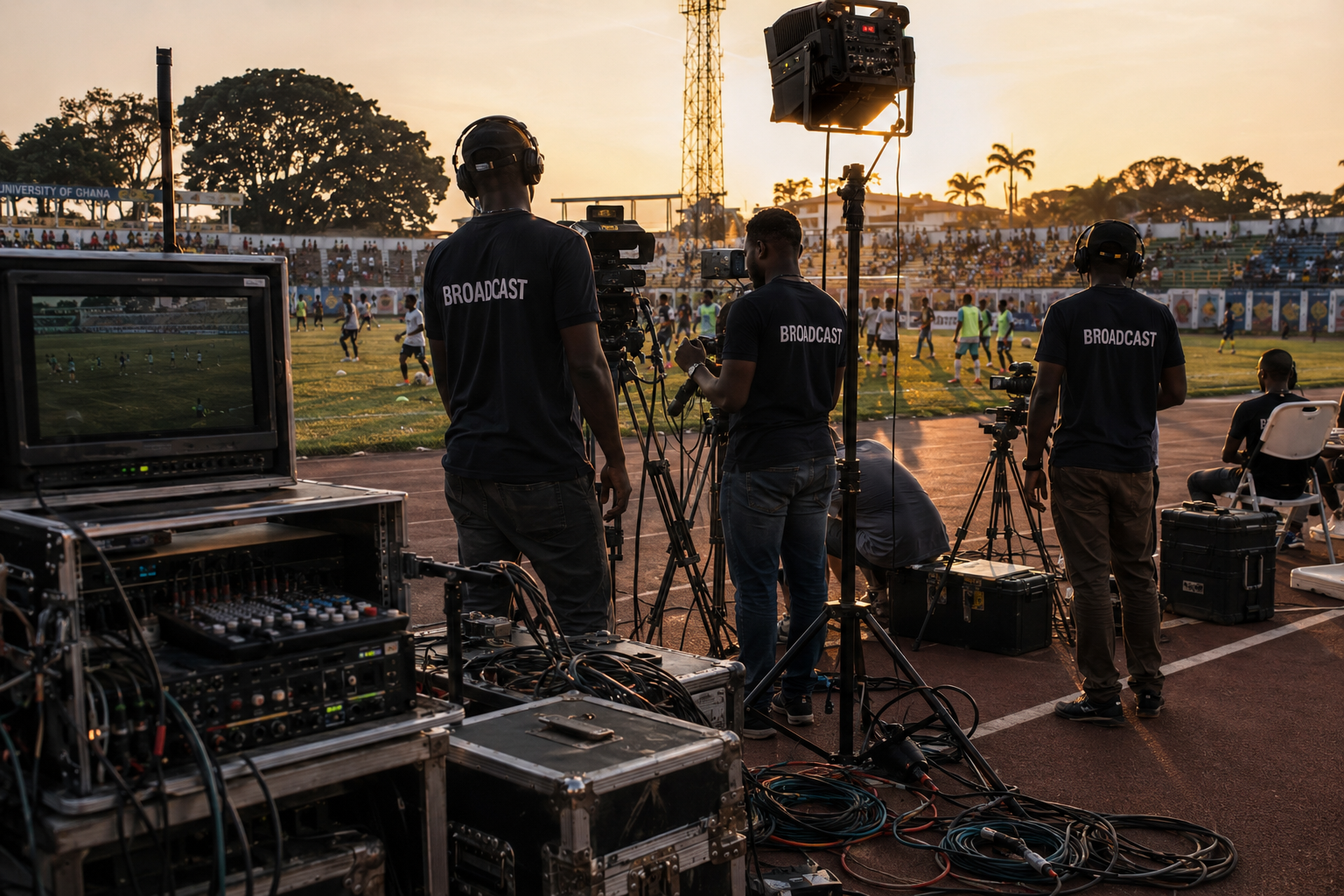
The distinction matters more than it might first appear. A broadcaster negotiating rights to an established professional league is negotiating for content that already exists, with an audience that is already known and, in a market like Ghana’s, already contested by multiple bidders. A broadcaster or digital platform looking at university sport is looking at a category that does not yet have an incumbent to displace, an open lane rather than a competitive bidding war, at precisely the moment domestic broadcasters are actively searching for new, cost-effective content categories to fill a schedule that a single professional league can no longer fully anchor on its own.
This is the argument for infrastructure over individual talent stated as plainly as it can be. Competition structures determine whether an audience has something to follow every week or only during a single tournament. Media platforms determine whether that competition reaches anyone beyond the stadium gates. Athlete development systems determine whether the talent inside that competition is documented well enough for a scout, a brand, or an investor to actually evaluate it. Institutional networks, universities, athletic associations, broadcasters, sponsors, determine whether any of the above survives past a single season. None of these four layers is optional. A platform strong in athletes but weak in any of these four is a platform with a ceiling. A platform built deliberately across all four is a platform with a compounding curve.
It is worth naming the specific risk this structure is designed to manage, because it is the same risk that has quietly undermined previous attempts at organised African sport ventures. A platform built around a single sponsor, a single broadcast deal, or a single generation of standout athletes carries exactly the concentration risk that infrastructure investors spend their careers trying to avoid. Diversify the sport, the market, and the revenue stream simultaneously, football alongside basketball, athletics, and rugby, three countries rather than one, competition revenue alongside broadcast and sponsorship revenue, and no single point of failure can meaningfully threaten the platform’s overall value. That is standard infrastructure investment logic, applied to a sector that has historically been evaluated using the far more fragile logic of a single-team sponsorship deal.
University Sport as a Long-Term Asset Class
The clearest way to understand university sport’s investment case is to stop evaluating it as a single competition product and start evaluating it as infrastructure in the fullest sense of the word, closer to a toll road or a fibre network than to a single sponsored match. A toll road generates value every time a vehicle uses it, for decades, regardless of which specific vehicles they are. A properly built university sport platform generates value every season, regardless of which specific athletes are competing in a given year, because the structure itself, not any single roster, is the asset.
HiFL is the proof of that model at a smaller scale. Real university competition, run consistently in Nigeria between 2018 and 2023, produced a documented cohort of professional athletes now competing in Hong Kong, Spain, Saudi Arabia, Scotland, Kosovo, and the CAF Champions League. The specific players changed every season. The structure that kept producing outcomes did not. That is the definition of an asset class rather than a one-off commercial product, a system that keeps generating value across changing rosters, changing seasons, and changing market conditions, because the infrastructure underneath it was built to last.
Athletes retire. Rosters turn over every season. Infrastructure, built properly, keeps compounding regardless.
HiSL’s expansion of that model across Nigeria, Ghana, and Ivory Coast applies the same asset-class logic at regional scale, multiple sports, multiple markets, one shared commercial and broadcast infrastructure underneath all of it. For institutional investors already comfortable with infrastructure as a category, ports, telecoms towers, fibre networks, the underlying logic of a properly built sports platform should feel considerably more familiar than the personality-driven, single-season sponsorship deals that have historically defined commercial involvement in African sport. The demographic wave is real and already measurable. The audience attention is real and already measurable, as FIFA’s own tournament data confirms. What has been missing is the structural layer to convert that scale into something that compounds season over season, rather than resetting to zero every time a single tournament ends.
None of this requires an investor to take a view on any single athlete, any single season’s results, or any single country’s football fortunes in a given year. That is, in a sense, the entire point. The investment case for African sports infrastructure has never depended on picking the next star correctly. It depends on recognising that a region with this much demographic momentum, this much verified cultural depth in sport, and this little organised commercial infrastructure relative to its scale represents exactly the kind of structural gap that patient, well-positioned capital exists to close.
The window for recognising that gap early will not stay open indefinitely. Every year that passes without organised infrastructure being built underneath West Africa’s university sport ecosystem is a year that population, that audience, and that verified talent, the kind that produced a genuine FISU World Cup champion without any commercial platform’s help, continues generating value that nobody is currently positioned to capture systematically. The demographic story, the sports economy story, and the infrastructure story told here are not three separate arguments. They are the same argument, viewed from three different vantage points, all pointing toward the same conclusion at the same moment.
Follow The Infrastructure
The future of sport will be shaped not only by athletes, but by the infrastructure that supports them. Follow HiSL as we continue exploring the systems, platforms, and partnerships shaping that future across West Africa.
Institutions, governing bodies, and commercial partners who want to understand what HiSL’s platform means for their context should contact the HiSL partnerships team at partnerships@hislglobal.com or visit hislglobal.com/partners.