What Early Institutional Partners Recognized Before the Market Did
Most sponsorship conversations begin with a media pack. A logo placement diagram. A list of signage positions across a venue.
This one starts somewhere more useful.
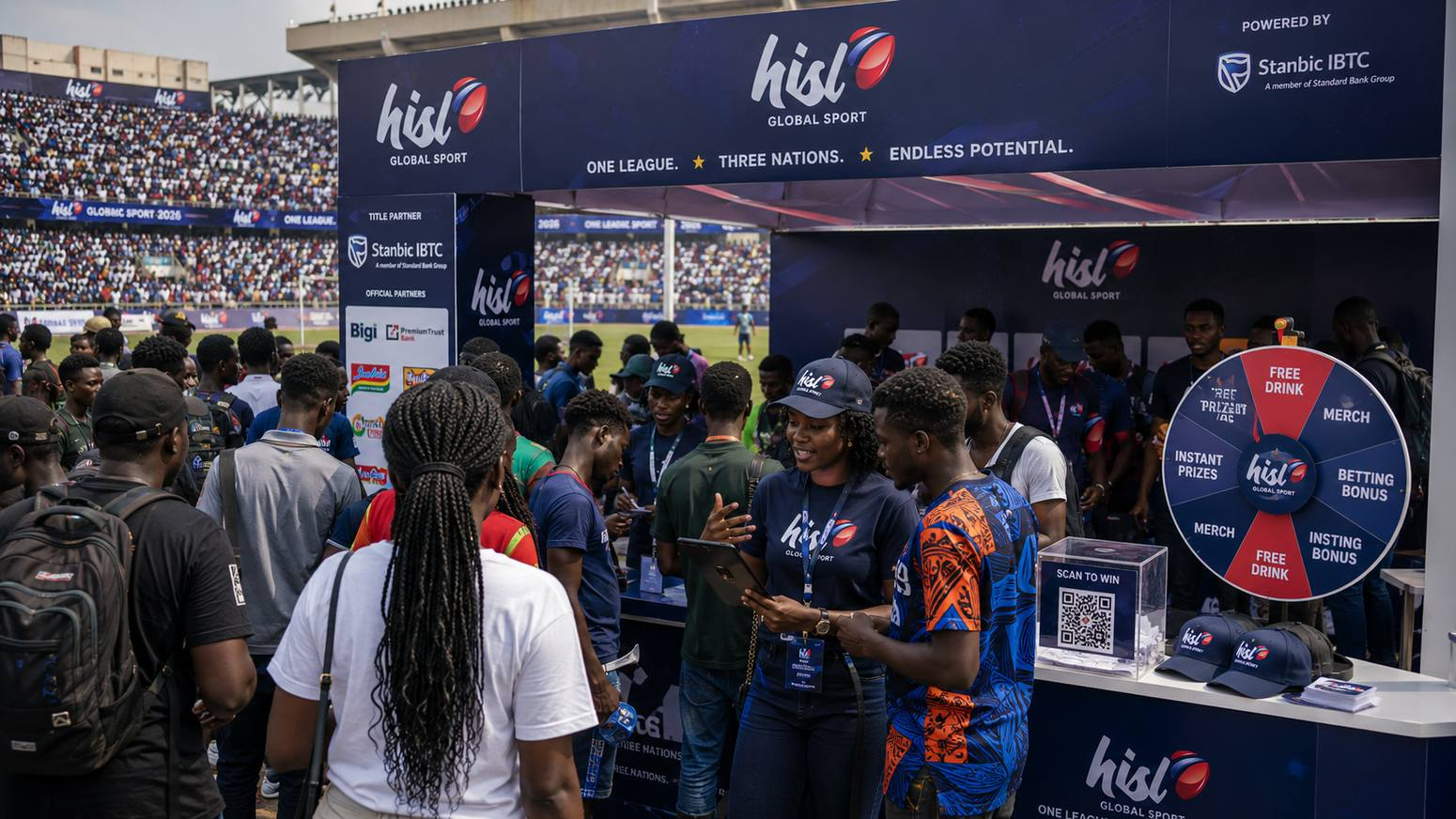
Imagine your field team arriving at a university campus in West Africa, on a cold Tuesday afternoon competing with lectures and general student indifference, but one hour before kickoff on matchday. The stadium is filling. Students have arrived in groups, in their colours, already in the mood. The energy is not manufactured. It is the natural product of institutional competition and student pride meeting in the same place at the same time.
Your activation booth is open. Your brand is the reason the halftime performance is happening. When the final whistle goes and your team presents the post-match award, that moment is on fifty phones before the player has left the pitch. That moment travels on student social timelines for days.
That is what HiSL delivers to a commercial partner. Not a logo on a banner. A designed window of concentrated, high-intent audience attention built into the structure of the season, not bolted on as an afterthought.
The question is not whether collegiate sport in West Africa has an audience. The audience already exists across universities in Nigeria, Ghana, and Ivory Coast. the real question is which platform builds the governance, media infrastructure, and commercial architecture capable of organizing that audience at scale. According to IFC’s July 2025 announcement of a combined $50 million commitment to African sports and entertainment infrastructure, “Africa’s sport and entertainment sector remains largely underfunded, with limited investment in infrastructure, talent development, and intellectual property”, a gap statement that confirms the audience exists and the structural layer to monetize it does not yet exist at scale. HiSL is that structural layer.
The Problem Every Fintech and Telco Already Knows
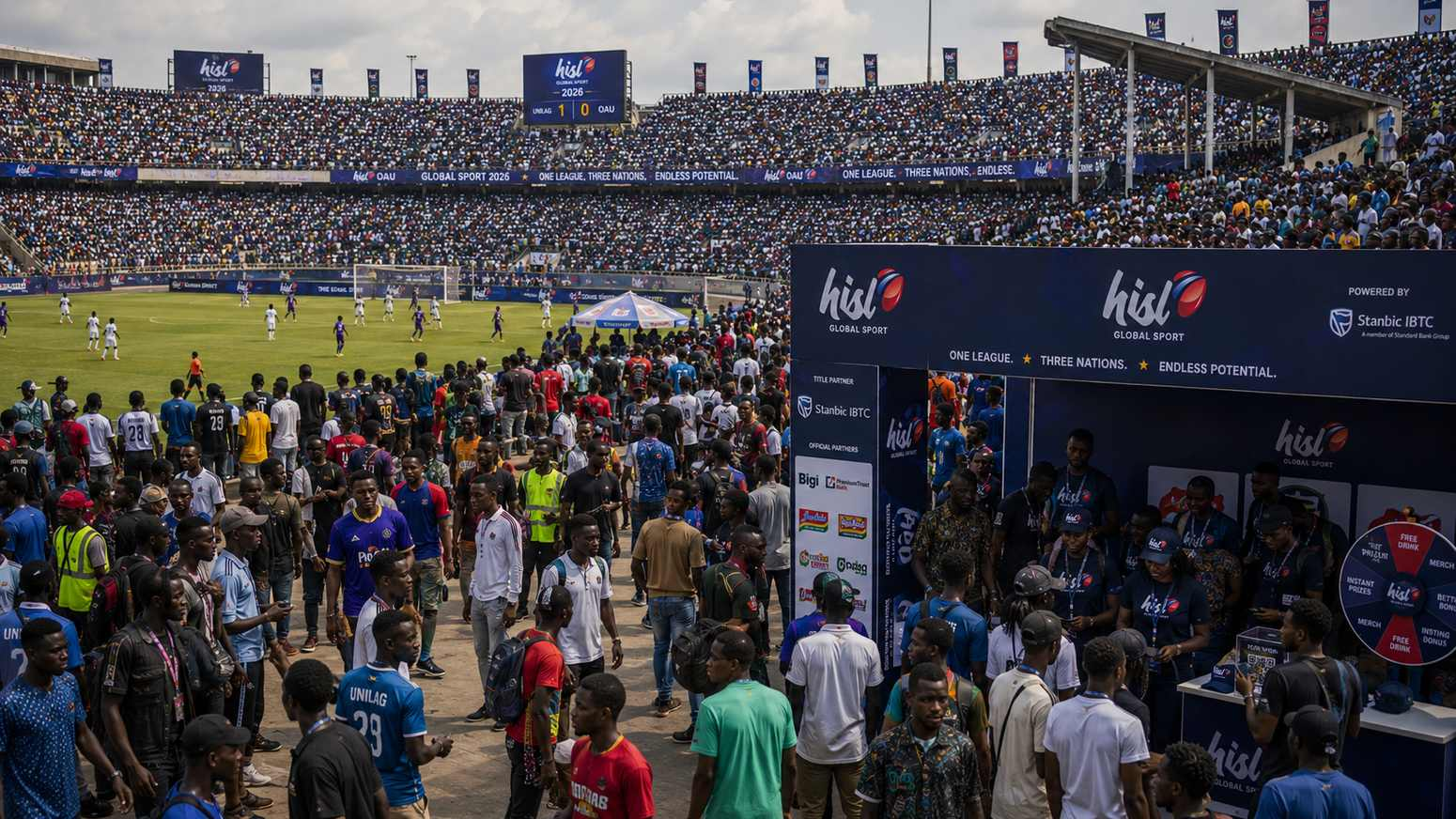
Fintechs and telcos already know the value of the campus demographic. The brands working hardest in this space, OPay, Palmpay, Airtel, Kuda, already have field budgets allocated to university acquisition. The teams are deployed. The strategy exists. The problem is structural, not strategic.
Cold campus visits generate entry friction. An unannounced brand presence on a campus competes with everything else happening that day, assignments, social plans, the general indifference of students to a table they did not ask to see and have no reason to approach. Conversion rates reflect that friction consistently. The cost per acquired customer in a cold activation environment is high, and the quality of that acquisition, the depth of engagement, the brand recall, the likelihood of product adoption, is low.
As PwC’s analysis of the Gen Z consumer landscape notes, brands that achieve durable loyalty with the 18–26 demographic do so not through interruption but through “authentic integration into experiences the audience has already chosen to attend.” Cold campus activation is, by definition, interruption. It is not integration.
HiSL does not solve this tactically. It solves it structurally.
When a brand enters a campus as a HiSL commercial partner, it does not arrive as an interruption. It arrives as part of an event that students have already chosen to attend, that the university has endorsed, and that carries institutional authority behind every touchpoint. The students are invested in the outcome before the brand says a word. The brand is not fighting for attention, it is embedded inside the experience that already has it.
This is the difference between a field activation and a platform activation. One is a visit. The other is a presence. The distinction is the difference between acquisition and loyalty.
Inside a Matchday: What the Sequence Delivers
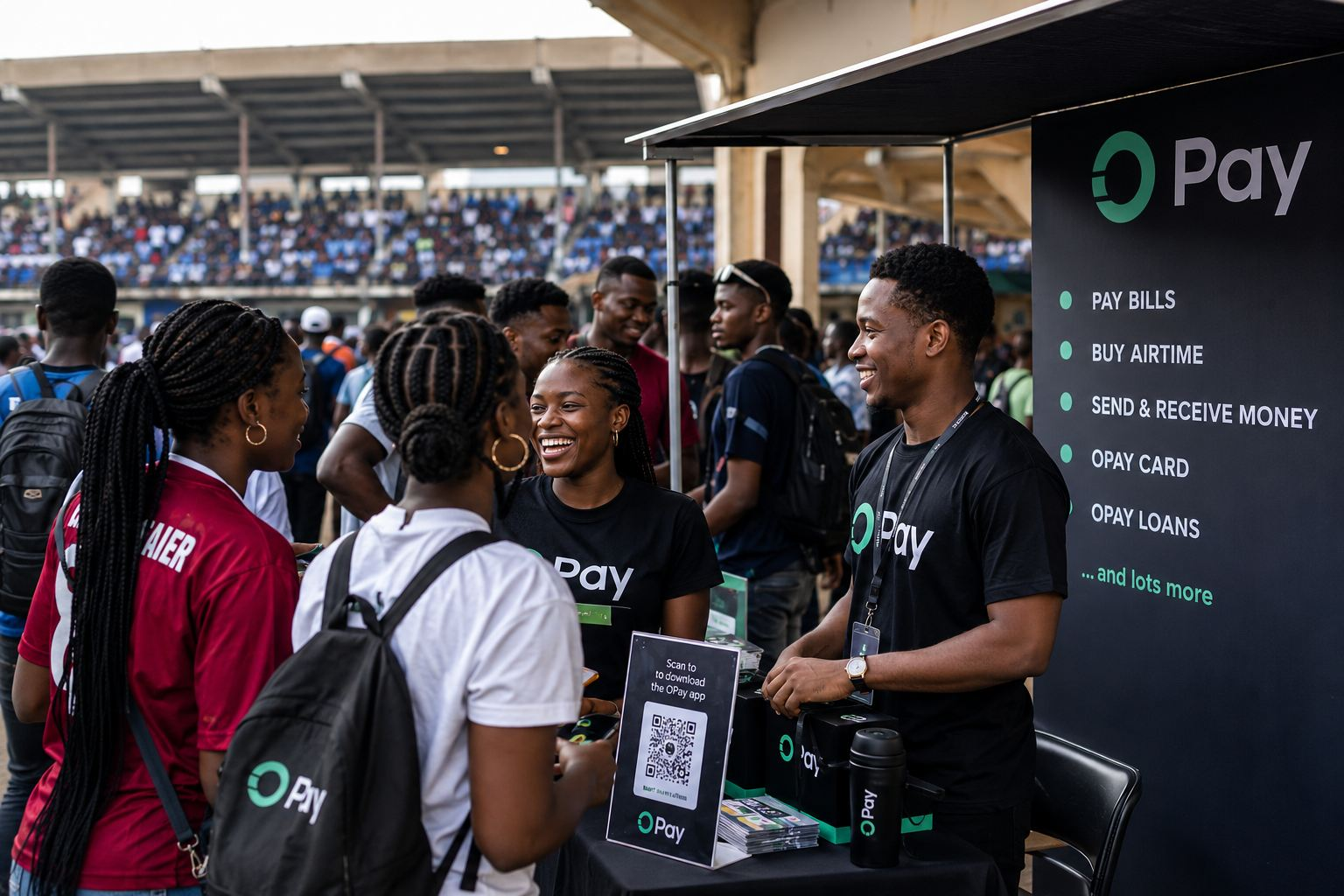
Beyond matchday, HiSL Global also creates year-round campus activation opportunities across universities in Nigeria, Ghana, and Ivory Coast, allowing brands to engage students through digital campaigns, creator partnerships, experiential activations, ambassador programmes, and culturally relevant youth engagement infrastructure beyond the stadium environment.
The commercial logic of a HiSL matchday is not accidental. It is sequenced, and every stage of that sequence serves a distinct brand purpose, documented and repeatable across 30 universities and a full season calendar.
One Hour Before Kickoff. Activation booths open across the stadium concourse. Students are arriving in groups, relaxed, social, and in precisely the psychological state that brand researchers identify as peak receptivity, high mood, low guard, in the company of peers whose opinions matter to them. This is not a captive audience waiting for something else. It is a self-selected audience that showed up for this. The Ehrenberg-Bass Institute’s research on brand memory formation identifies social, positive-affect environments as the conditions in which brand associations form most durably. HiSL’s matchday creates that condition deliberately, structurally, and repeatedly.
During the Match. Branded assets are woven into both the broadcast and the live experience simultaneously. Digital-first production means that what happens inside the stadium travels well beyond it. According to GSMA projections, Sub-Saharan Africa will contribute 25 percent of all new mobile internet users globally between 2025 and 2030, meaning the delivery infrastructure for digital brand moments is expanding at exactly the rate at which HiSL is generating them. A brand moment in a HiSL matchday does not expire when the final whistle blows. It lives on student phones, on social timelines, and in the highlight content that circulates for days afterward.
At Halftime. The branded performance slot is not filler. For the campus demographic, it is a primary attraction of the matchday experience. The brand is not interrupting the entertainment, it is providing it. That distinction is the difference between a logo seen and a moment remembered, between a passive impression and an active association.
Post-Match. The award presentation is the most shareable moment of the day. The winning captain. The branded podium. The clip that every student from that university posts without prompting. Organic distribution at scale, at zero additional media cost. The brand earns earned reach through the emotional resonance of the moment itself.
Across 30 universities and an entire season, this does not happen once. It happens repeatedly, in different cities, in front of different campus communities, each one a distinct acquisition opportunity inside the same commercial partnership, each one adding to an aggregate audience profile that no individual campus event can approach.
A Commercial Architecture, Not a Rate Card
HiSL’s sponsorship architecture is not a rate card. It is a set of deliberate commercial positions, each designed to serve a specific business objective. The distinction matters: a rate card is transactional. A designed commercial structure is a partnership framework in which the brand’s business objective determines its entry point, not the other way around.
As PwC observed in its analysis of collegiate sports commercialisation, the most durable sports sponsorships are not bought as inventory. They are structured as “long-term partnerships built around specific commercial outcomes for the brand”, a model that HiSL has built from the ground up rather than retrofitted onto a legacy event format.
Founding Partner, Season Naming Rights. At the top of the structure sits a single position: the Founding Partner. One brand. One category. Season-naming rights across the entire HiSL 2026 platform, football, basketball, all 30 universities, all four zones, and the National Final. What that investment buys is not visibility. It is identity. The Founding Partner’s name is embedded in the season’s narrative from Draft Day through the final whistle of the championship. For a financial institution, a telco, or a consumer brand with national reach ambitions, this is the most efficient way to own the collegiate conversation in Nigeria for an entire year. There is no equivalent channel for reaching one million university students with season-long, institutionally endorsed brand presence at this investment level.
Campus Activation Partner, 30 Campuses, One Category. The Campus Activation Partner position is designed for brands whose primary commercial objective is direct consumer acquisition at scale. One brand per category. Access to all 30 campuses across the season, with HiSL’s institutional endorsement behind every activation. For fintechs and telcos operating in a competitive acquisition environment, where the cold-visit problem described above is a documented cost of doing business, this is the structural solution. The category exclusivity is not a sales technique. It is the commercial guarantee that makes the investment defensible internally, protecting the brand’s return from competitive dilution for the entirety of the season.
Matchday Sponsors, Banking, Telco, Beverage, Derby. The Matchday Sponsor tier is designed for brands that want high-frequency, high-visibility presence without season-long commitment. Specific match categories, the Bank Derby, the Telco Derby, the Beverage partner matchday, create named commercial moments within the season calendar. These are not generic signage placements. They are branded occasions with their own narrative arc, their own audience build-up, and their own social lifespan that extends well beyond the ninety minutes of the match itself.
Each tier serves a different commercial purpose. A brand’s entry point into HiSL should be determined by what it is trying to achieve commercially, not by what is cheapest or most familiar. This is the conversation HiSL’s partnerships team is structured and equipped to have.
The Global Precedent That De-Risks the Opportunity
Collegiate sport is no longer an experimental commercial category. Globally, some of the world’s largest brands, broadcasters, and institutional investors already treat university sports as long-term media and youth engagement infrastructure.
In the United States, the NCAA ecosystem evolved into a multi-billion-dollar sports economy built on media rights, sponsorship integration, athlete visibility, and structured audience ownership. Across Europe and Asia, university sports systems aligned with organisations such as FISU continue to attract institutional partnerships because structured collegiate competition consistently delivers concentrated youth audiences and long-term brand relevance.
The commercial logic behind HiSL Global follows the same structural principles now shaping modern sports-media ecosystems globally: centralised governance, scalable content infrastructure, recurring audience engagement, and sponsor-ready competition architecture.
This matters because institutional capital rarely enters unstructured environments. Brands invest where governance exists, where audiences are measurable, and where media infrastructure creates repeatable commercial value. The precedent already exists internationally. What HiSL Global represents is the localisation and scaling of that collegiate sports model across West Africa’s rapidly expanding university ecosystem.
As collegiate sports commercialisation continues to mature globally, the strategic question is no longer whether African university sport can become commercially viable. The question is which platform structures the market first.
PwC’s 2025 Africa Sports Outlook, cited in Financial Fortune Media, December 2025
That shift from 15 to 70 percent is not a marketing phenomenon. It is a governance phenomenon. It is the direct commercial consequence of leagues building the structural frameworks, standardised operations, centralised rights, documented audience metrics, that make sponsorship investment defensible for institutional marketing functions. Stanbic IBTC and MTN backed HiFL because HiFL had built that framework in Nigeria. Their participation is the documented proof that it worked.
The 2026 HiSL season does not ask a brand to take a leap of faith that Stanbic IBTC and MTN already took. It offers a more structured, more commercially complete version of what those brands already paid for, with greater geographic reach, a multi-sport content engine, improved digital-first production infrastructure, and a data capture model that generates the kind of audience analytics that modern marketing functions require to sustain and renew investment.
The precedent is set. The question for brands evaluating 2026 is not whether this works. It is whether they want the founding-tier position or the one that comes after it.
Revenue That Compounds Without a New Conversation
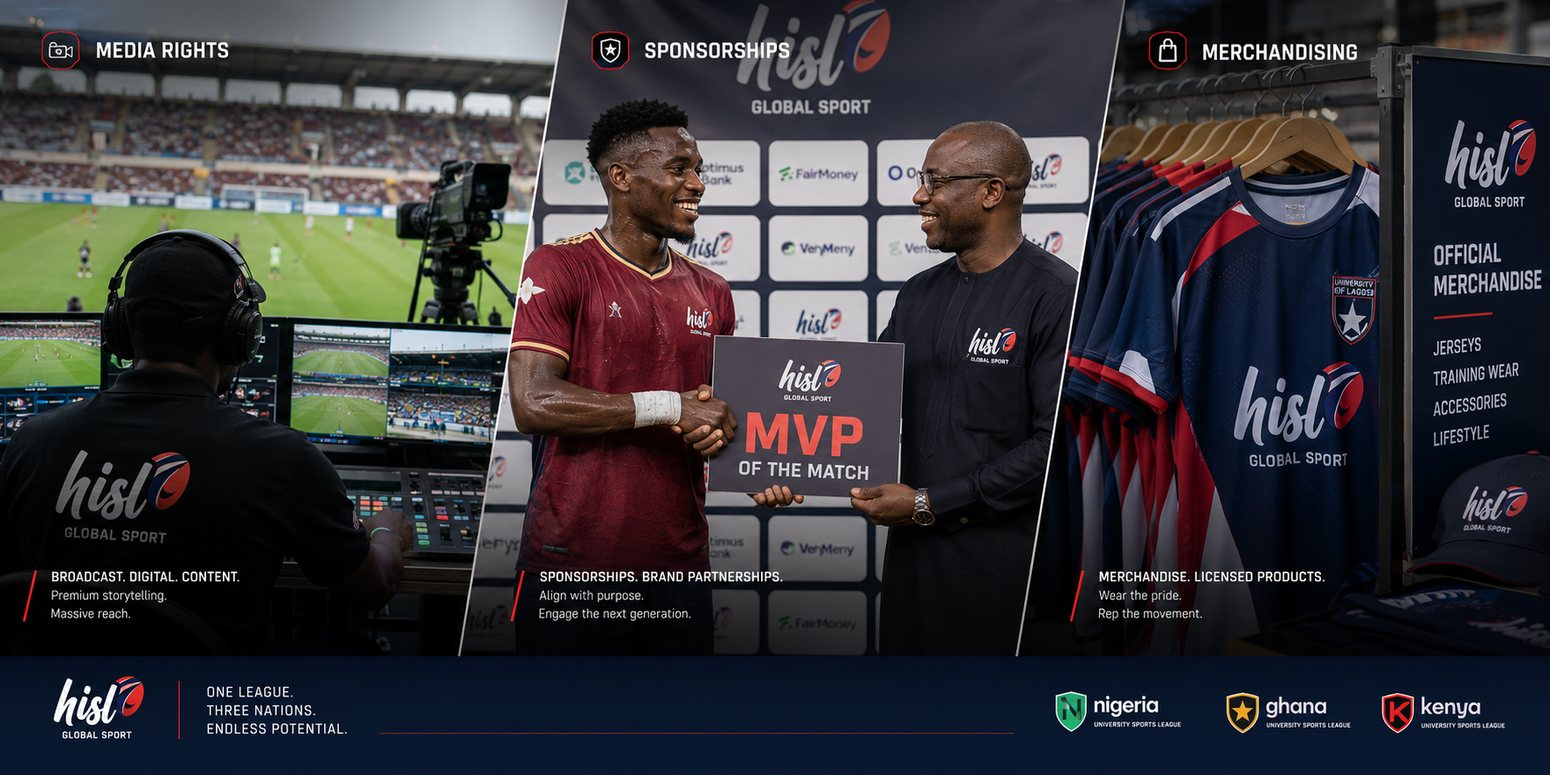
A mature commercial platform does not depend entirely on new sponsor conversations to sustain itself season on season. HiSL is building revenue architecture that compounds, and that signals something important to both brands evaluating multi-year partnerships and investors assessing the platform’s long-term financial structure.
Content Licensing. The 72+ matches produced each season form a recurring, appreciating media asset. Broadcast partners and streaming platforms pay for access to a predictable, high-quality content library with consistent production standards. As Semafor reported in January 2026 in its investigation into African broadcast rights, global streaming platforms are already actively evaluating African sports content at the professional level, “Netflix notably rolled out a daily highlights show for AFCON 2025 in Morocco, pointing to the potential entry of streaming companies in future CAF broadcast deals.” The collegiate content layer, which currently has no standardised rights package to licence, is the natural next frontier in that acquisition sequence. HiSL is building the rights package before the bidders arrive.
Player Voting Sponsorships. Most Valuable Player, Most Improved, Top Scorer, branded award categories that generate campaign content, social engagement, and fan participation entirely outside the matchday window. A brand sponsoring the MVP award is not buying a moment. It is buying a season-long conversation between the brand and the audience, renewed every time a voting cycle opens, every time a shortlist is announced, and every time a winner is presented. This is the difference between event sponsorship and narrative sponsorship.
Merchandise. University jerseys, league-branded apparel, and limited-edition derby merchandise create a third revenue line that carries brand equity beyond the season calendar. According to PwC’s analysis of collegiate sports commercialisation, merchandise is one of the most durable brand-loyalty mechanisms available in the collegiate demographic, the student who wears the jersey has made an active identity statement, not a passive consumption choice. Every item sold extends the brand’s presence into environments that no activation budget can reach.
These streams are not aspirational projections. They are designed components of the HiSL commercial model, operational from day one of the 2026 season. Their existence signals commercial maturity to both sponsors and investors: this platform understands monetisation as a system, not a series of one-off transactions. The G20 Sports Infrastructure Advisory stated the underlying principle plainly: “evidence from the US, Europe and emerging African markets shows that when metrics, infrastructure and governance improve, capital follows.” HiSL is building the metrics, the infrastructure, and the governance simultaneously.
The Window Is Defined. The Category Is Yours Until It Is Not.
Founding Partner and Campus Activation Partner positions for the 2026 season are available now, ahead of Draft Day. Both are category-exclusive. That exclusivity is not a sales technique, it is a structural guarantee built into the commercial architecture of the season. Once a category is filled, it is closed. A competing brand cannot buy its way into the same tier for the duration of the season.
If you are a fintech company, telecom operator, financial institution, media platform, technology company, or brand operating across Africa’s high-growth youth markets, collegiate sport represents one of the continent’s most concentrated and under-structured audience ecosystems, the calculus is direct: HiSL is where your core acquisition demographic spends its most engaged hours. The infrastructure to reach that demographic, with institutional endorsement, documented historical precedent, and a structured commercial model behind every touchpoint, is available for Q2 2026.
If you are an investor reading this as evidence of commercial architecture rather than a sponsorship pitch, which it is, equally, the structured tier model, the self-sustaining revenue streams, and the historical validation from Stanbic IBTC and MTN represent the documented proof that this platform’s monetization system is designed, not projected.
Draft Day marks the opening of the season’s commercial chapter.
The founding positions in that chapter are finite. The brands that move first do not just get the best placement. They get the category. And once it is gone, it is gone for the season.
To discuss brand partnership and sponsorship opportunities for the 2026 HiSL season, contact the HiSL partnerships team at partnerships@hislglobal.com or visit hislglobal.com/partners.