Beyond Football: The Rise of Multi-Sport University Competition in Africa

Football may dominate headlines, but university campuses tell a different story. Across West Africa, athletes compete every day in multiple sports, often with the same commitment, ambition, and potential as their football-playing peers. A basketball point guard running defensive drills before sunrise. A sprinter timing herself against a stopwatch held by a teammate. A rugby forward doing extra sessions on a pitch that, a few years ago, did not exist. None of it makes the same noise a matchday does. All of it is building the same thing.
That gap between attention and reality is worth sitting with, because it shapes how any serious platform in this space should actually be built. If organised collegiate sports in West Africa is designed around football alone, it inherits football’s audience quickly and its ceiling just as quickly. If it is designed around the full range of sport already happening on these campuses, football included but not football only, it inherits something considerably larger: a multi-sport talent base that is growing in parallel, largely undocumented, and increasingly impossible for the wider sporting and commercial world to ignore.
HiSL was built on that second premise. Not as a diversification exercise layered on top of a football platform, but as an honest reflection of what university sport in Nigeria, Ghana, and Ivory Coast actually looks like when you walk the length of a campus rather than just the touchline of its main pitch.
Walk that length and the picture changes quickly. Past the football pitch, there is usually a basketball court, sometimes indoors, sometimes just painted lines on concrete, with a run happening whether or not anyone official is watching. Further along, a track, often shared with the wider community on weekends, still hosting timed sessions during the week. Somewhere on the edge of campus, increasingly, a rugby pitch, newer than the others, but no less serious to the players using it. None of these spaces were built because a platform demanded them. They exist because students wanted to compete, and universities, with whatever resources they had, made room for it.
That is the foundation this piece is actually about. Not a theoretical case for diversification, but a description of something that is already true on the ground across West Africa’s university campuses, and an argument for why the platform built to organise it should reflect that truth rather than narrow it.
Why Football Remains the Anchor
None of this is an argument against football’s centrality, because football’s centrality is simply a fact. It is the largest audience driver in every one of HiSL’s pilot markets, the sport most likely to fill a stand, dominate a group chat, and shape a campus’s sense of itself in a given week. Any honest account of university sport in West Africa has to start there, with the game that carries the weight.
The 2026 FIFA World Cup has only reinforced how much commercial and cultural gravity football carries across this region. WARC‘s analysis of the tournament’s advertising market places Africa among the regions with the highest viewing intensity per capita globally, and FIFA’s own reinvestment of tournament revenue across its 211 member associations reflects a sport still treating African markets as a genuine growth engine rather than an afterthought.
The tournament’s knockout stage has also delivered a sharper version of an argument that matters directly to HiSL’s thesis. Ghana advanced from a difficult group as one of the eight best third-place finishers before its run ended in the Round of 32. Ivory Coast, fielding the highest-valued African squad in the competition, went out at the same stage. Nigeria did not qualify at all, a second consecutive World Cup missed. Different outcomes, same underlying story: talent that is real and deep, meeting a development structure that has not yet fully caught up to what that talent deserves. Football’s dominance is not in question. What organised collegiate sport does is give football’s obvious pipeline the same structured development window that every other sport on campus is quietly waiting for as well.
There is also a simpler, more practical reason football has to anchor any serious university sport platform in this region. Football is the sport every stakeholder already understands. University administrators know how to schedule around it. Sponsors know how to value it. Broadcasters know how to programme it. That familiarity is not something a multi-sport platform should discard. It is something it should build from, using football’s already-proven structure, the model HiFL demonstrated between 2018 and 2023, as the template that basketball, athletics, and rugby can each be organised against, rather than reinventing a development framework from nothing for every sport a platform touches.
The Growing Opportunity in Basketball
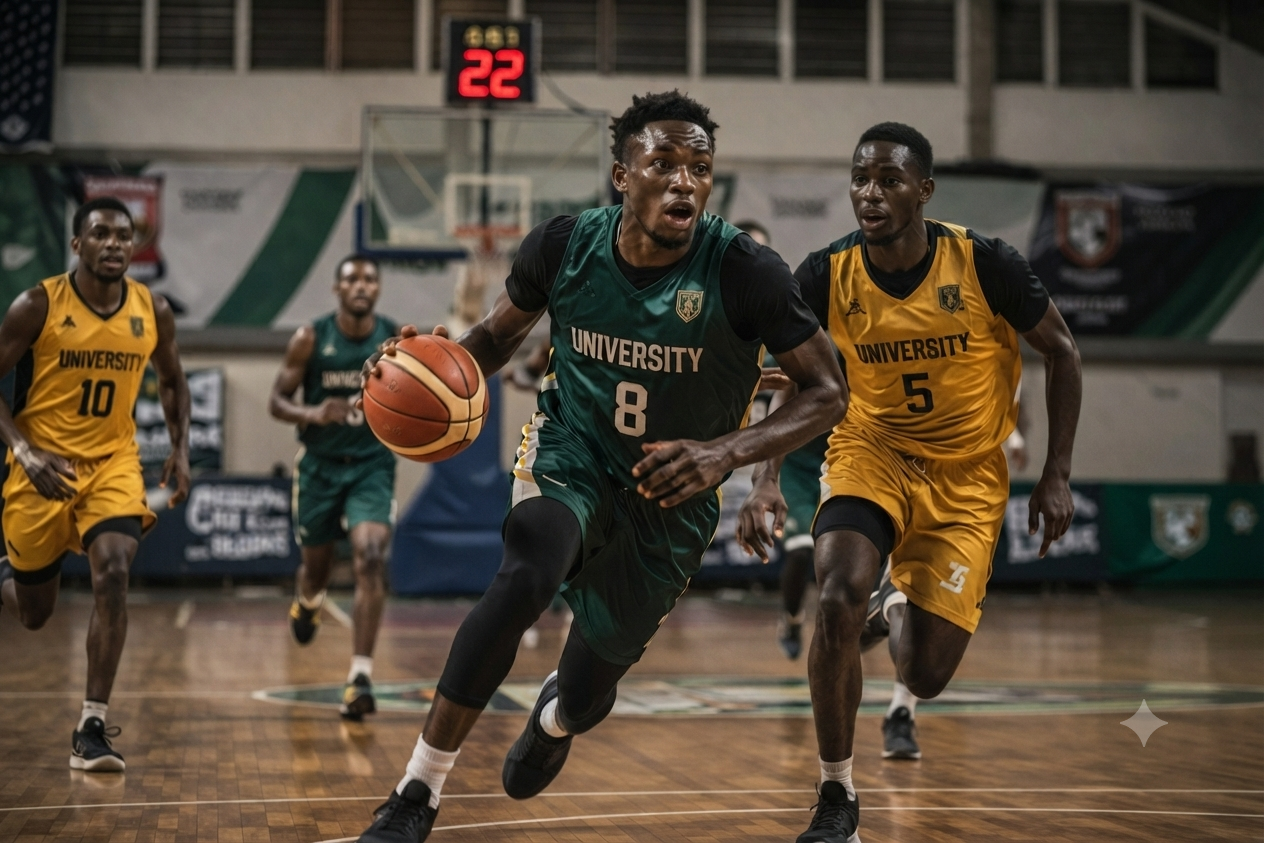
If there is one sport proving, in real time, that African audiences will show up for organised competition beyond football, it is basketball. The NBA’s continued commercial commitment to the continent through the Basketball Africa League is not a gesture. It is a bet, backed by real numbers, on a market the league believes is still early in its growth curve.
Those figures matter because they describe an audience the NBA did not have to build from scratch. It found one already forming and gave it something organised enough to sustain. That is precisely the argument for a university basketball layer underneath that ecosystem, one that documents athlete performance, runs a genuine competitive season, and gives scouts, academies, and the wider basketball development pipeline an earlier, more structured point of entry into West African talent than they currently have.
Nigeria’s own basketball culture has been building toward this moment for years, from a growing domestic league infrastructure to a national team system that has repeatedly punched above its historical weight on the continental stage. A structured collegiate basketball season, run with the same seriousness HiFL brought to university football, does not need to invent interest in the sport. It needs to organise interest that is already there, the same pattern the Basketball Africa League itself proved works at the professional level.
What makes basketball a particularly instructive case study inside a multi-sport argument is how differently its audience behaves compared to football’s. The Basketball Africa League’s viewership skews younger and more digitally native, built on YouTube and social clips rather than terrestrial broadcast alone. That is not a smaller audience than football’s, it is a different one, reached through different channels, valuable to a different set of sponsors, particularly the telecoms and fintech brands whose own customer base looks almost identical to the demographic filling BAL arenas. A university basketball player gives HiSL a direct line into that same audience, years before those students become the professional-league fans the NBA is already counting.
The BAL’s own qualification structure reinforces the case for a university layer feeding into it. National league champions from countries including Nigeria automatically qualify for the BAL’s regular season, while other nations compete through the Road to the BAL, a qualifying tournament run by FIBA Africa. That is a governance structure built entirely around domestic competitive strength. A university basketball season that documents its strongest athletes with the same rigour HiFL applied to football gives Nigerian basketball, specifically, a deeper bench of provable talent to draw from when domestic clubs are assembling the rosters that eventually compete for a BAL place.
Athletics and Performance Development

Athletics occupies a different role in this ecosystem than football or basketball. It is not primarily an audience driver in the way a matchday or a playoff game is. It is a foundation, the discipline where raw physical development, competitive composure, and performance data most directly translate across every other sport on a campus. A sprinter’s acceleration mechanics matter to a football winger. A distance runner’s aerobic base matters to a rugby back three. Athletics is where that cross-disciplinary development actually happens, and it happens most visibly on a university track.
The 2026 African Senior Athletics Championships made that visibility literal. Held at the University of Ghana Sports Stadium in Accra from May 12 to 17, the tournament brought more than 1,500 athletes and 500 officials from 54 countries onto a university campus for six days of continental competition. Nigeria’s Tobi Amusan, the world record holder in the women’s 100m hurdles, competed there. Nigeria’s women’s team won gold in the 4x100m relay. Ghana’s home athletes, including sprinter Abdul-Rasheed Saminu, competed in front of their own crowd on their own university track.
A continental championship did not need a new stadium built for the occasion. It used a university one. That is not a coincidence, it is a preview.
That a genuinely continental championship could be staged on a university athletics facility, using university infrastructure, in front of a stadium that exists to serve student-athletes first, says something important about where the physical foundation for organised collegiate sport already sits in West Africa. The tracks exist. The facilities exist. What has been missing is the season-long, documented competitive structure that turns a strong university athletics programme into a visible, trackable pipeline the way HiFL did for football and the way HiSL is designed to do across every discipline it touches.
There is alUso a talent-conversion argument specific to athletics that does not apply in quite the same way to the other sports in this piece. A university sprinter who never turns professional in athletics itself has not wasted four years of training. That same acceleration work, that same competitive composure built under championship pressure, transfers directly into football, into rugby, into basketball’s transition game. Athletics, organised properly at the university level, does not just produce athletics performers. It produces better-conditioned athletes across every sport a platform is trying to develop, which is precisely why it deserves the same documentation and seriousness HiSL brings to its other three disciplines, even though it will rarely be the sport that fills a stadium on its own.
Rugby and Emerging Opportunities
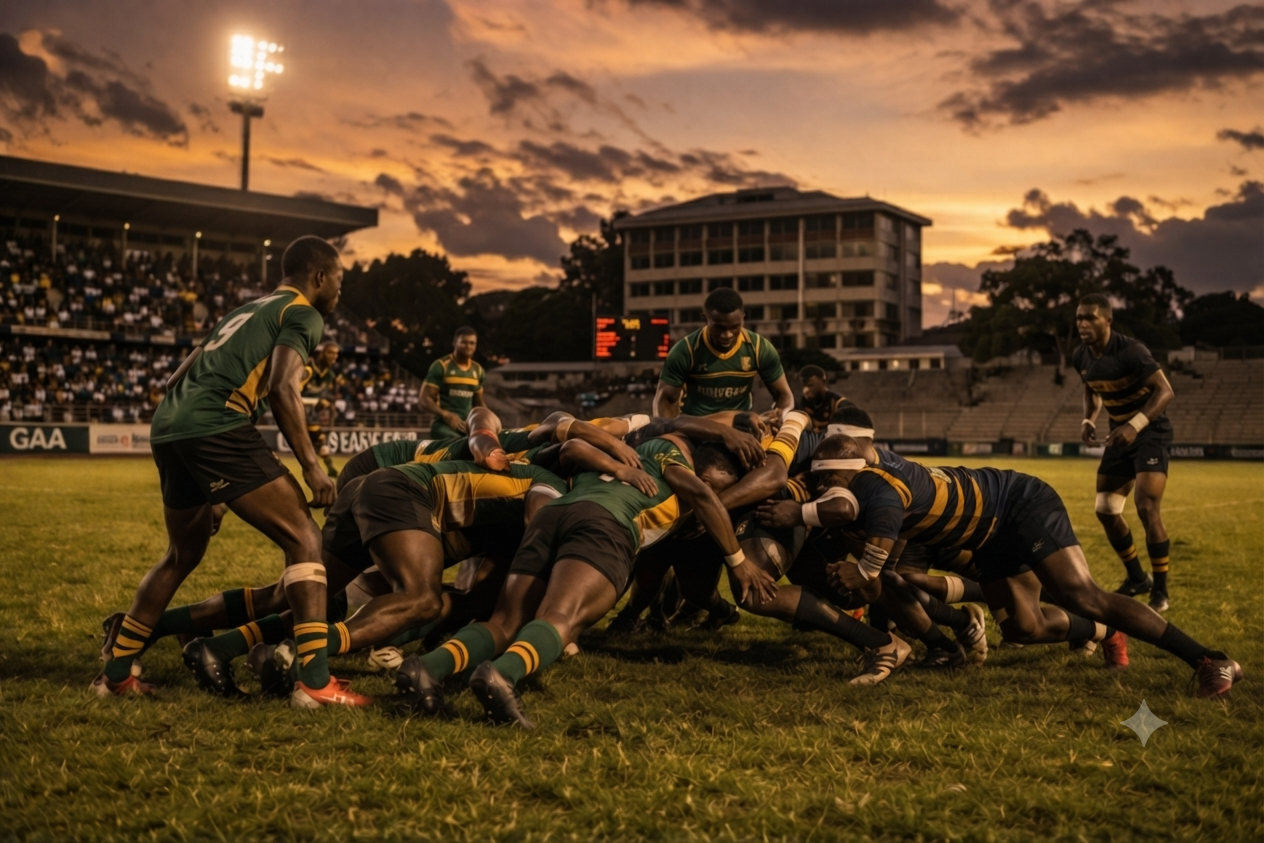
Rugby’s position inside this ecosystem is best understood as one component of a broader sporting landscape rather than a defining market-entry strategy. It does not carry football’s audience scale or basketball’s current commercial momentum in West Africa. What it does carry is real, and growing, infrastructure investment, much of it already tied directly to university sport.
Ghana unveiled a dedicated rugby stadium at the University of Ghana ahead of the 2024 African Games, a facility built specifically to host international rugby competition on a university campus. Rugby Africa, the sport’s continental governing body, now oversees 40 member unions across the continent, including Nigeria, Ghana, and Ivory Coast, all competing in regional development tournaments such as the West Africa Rugby Series that has run between these three markets since 2019.
That combination, real continental governance structure plus university-based infrastructure already built in a pilot market, is exactly the kind of foundation a multi-sport platform should be paying attention to, even when a sport is not yet positioned as a primary driver of audience or revenue. Rugby in West Africa does not need to become football’s equal to be worth including. It needs to be documented and organised well enough that the athletes already training on that University of Ghana pitch have a genuine pathway, the same as their football, basketball, and athletics counterparts.
The honest way to position rugby inside this ecosystem is as a discipline still early in its West African growth curve, worth including precisely because it is early. A sport that already commanded football’s audience and commercial infrastructure would not need a platform like HiSL to organise it, the market would already have done that work. Rugby’s current stage, real governance, real university infrastructure, genuine year-on-year growth, but still short of football’s or basketball’s visibility, is exactly the stage at which organised documentation adds the most value, because it is the stage at which almost nothing is currently being tracked at all.
What a Multi-Sport Ecosystem Creates
Universities do not experience these sports in isolation, even when the platforms built around them often do. The same student body fills the stands for a football match on Saturday and a basketball game on Wednesday. The same institutional infrastructure, fields, courts, tracks, medical staff, transport, sponsorship relationships, gets stronger when it is asked to serve four sports across a full calendar year rather than one sport across a single season.
That is the practical case for a multi-sport ecosystem. The commercial case is just as direct. A brand sponsoring a university sports platform gains exposure across football’s mass audience, basketball’s fast-growing digital following, athletics’ performance-driven storytelling, and rugby’s emerging development narrative, all through a single partnership rather than four separate ones. A broadcaster gains a full calendar of content rather than a single season’s worth. An institutional investor gains a platform whose commercial resilience does not depend entirely on one sport’s fortunes in one year.
A football-only platform rises and falls with football. A multi-sport platform compound. What one sport builds, the others inherit.
HiFL proved this thesis in a single-sport, single-country form, and the athletes it produced, competing today in Hong Kong, Spain, Saudi Arabia, Scotland, Kosovo, and the CAF Champions League, are the evidence that organised structure converts university talent into professional outcomes. HiSL is built to prove the same thesis at a larger scale: multi-sport, multi-country, with football as the anchor that draws the widest audience, and basketball, athletics, and rugby growing alongside it rather than in its shadow.
There is a version of this argument that is purely about risk management, and it is worth stating plainly because investors and commercial partners will think in exactly these terms. A single-sport platform’s value rises and falls with that sport’s fortunes in a given season, a poor World Cup cycle, an injury to a marquee athlete, a governance dispute at a national federation, any of these can meaningfully dent a football-only platform’s commercial story in a way that a multi-sport platform simply absorbs. When football has a difficult season, basketball’s growth curve continues. When one country’s rugby programme stalls, another’s, or athletics’ performance calendar, keeps the platform’s broader narrative moving. Diversification, in sport as in any other asset class, is not a hedge against ambition. It is what makes ambition durable enough to survive a single bad year in a single discipline.
The future of university sport in West Africa was never going to belong to a single competition. The demographic wave, the university sector growth, and the visible, verifiable proof that entire sports ecosystems, not just individual disciplines, are already active on these campuses all point toward the same conclusion. The opportunity was always collegiate sports as a whole, not one sport wearing a collegiate sport’s name.
None of this requires waiting for basketball, athletics, or rugby to reach football’s scale before they are taken seriously. It requires treating them, from the start, with the same documentation, the same competitive structure, and the same seriousness that a single sport has historically received in isolation. That is the difference between a football platform that occasionally mentions other sports and a genuine collegiate sports ecosystem built to grow all of them together.
Follow The Ecosystem
The future of university sport belongs to ecosystems, not individual competitions. Follow HiSL as we continue exploring how multiple sports can thrive together within a structured platform.
To discuss brand partnership and sponsorship opportunities for the 2026 HiSL season, contact the HiSL partnerships team at partnerships@hislglobal.com or visit hislglobal.com/partners.