Regional Clusters. Named Rivalries. One Season. Inside the Structure of West Africa’s Next Collegiate Sports Platform
When Structure Is the Product
When a West Africa university sports platform is designed correctly, the structure itself generates content, rivalry, and commercial value before the first ball is kicked.
The regional architecture creates the rivalries. The rivalries create the narratives. The narratives create the audience. The audience creates the commercial inventory. And the commercial inventory, built predictably across a founding cohort of institutions, regional competition corridors, and an entire season, creates the platform that sponsors, broadcasters, and investors have been waiting for in the African collegiate sports market.
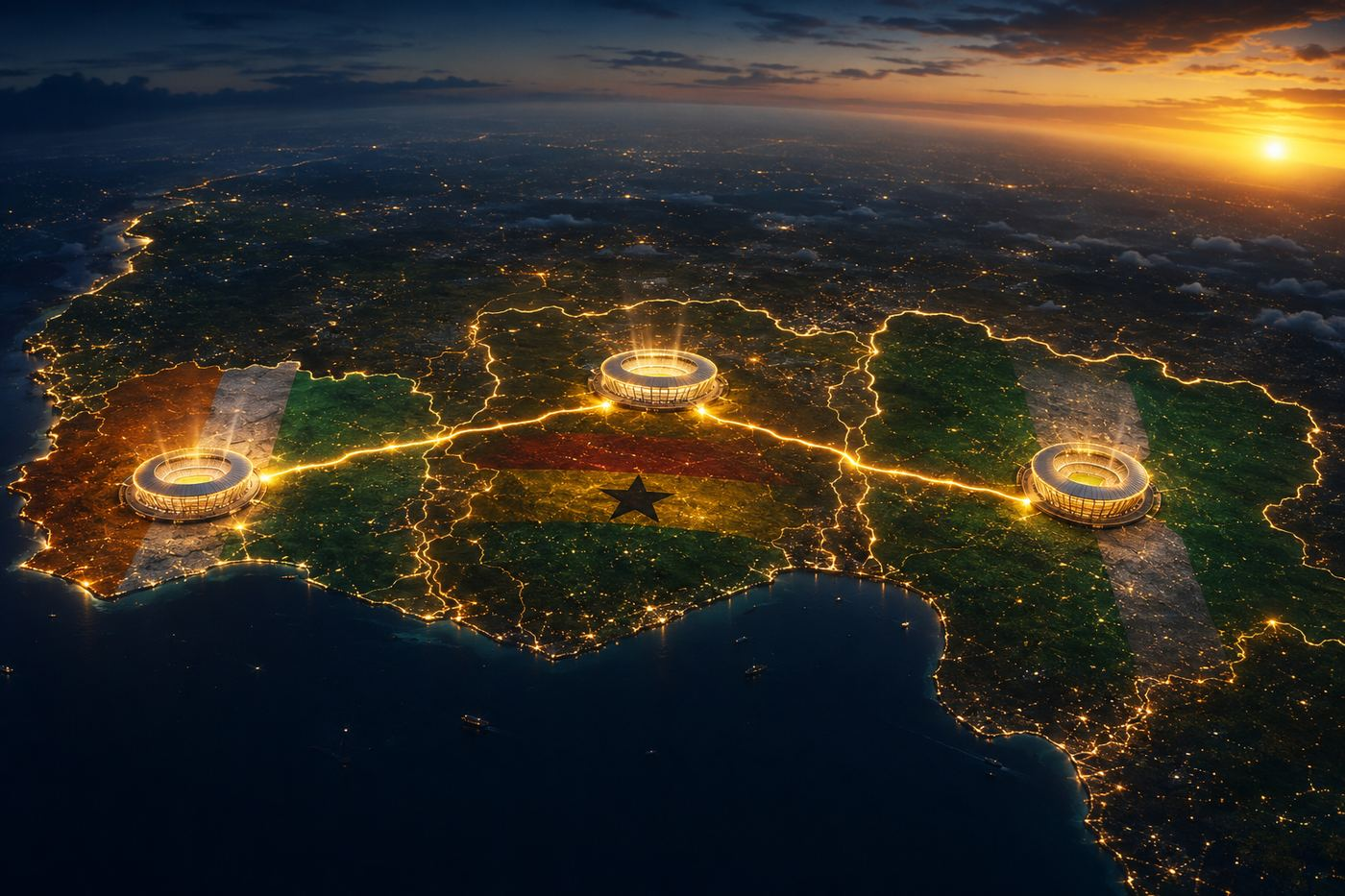
This is not a description of what HiSL hopes to build. It is a description of the relaunch roadmap that is being assembled across Nigeria, Ghana, and Ivory Coast, and the vision is already formed.
HiSL is a multi-sport, multi-country collegiate platform. The relaunch season begins with three markets, Nigeria, Ghana, and Ivory Coast, each selected for the depth of their university sports culture, the readiness of their institutional infrastructure, and the specific commercial and broadcast opportunities they present. The structure that follows is built to serve all three simultaneously, and to scale beyond them in sequence.
The regional architecture creates the rivalries. The rivalries create the narratives. The narratives create the audience. And the audience creates the commercial inventory.
The Regional Clusters: Why Geography Is the Rivalry Engine
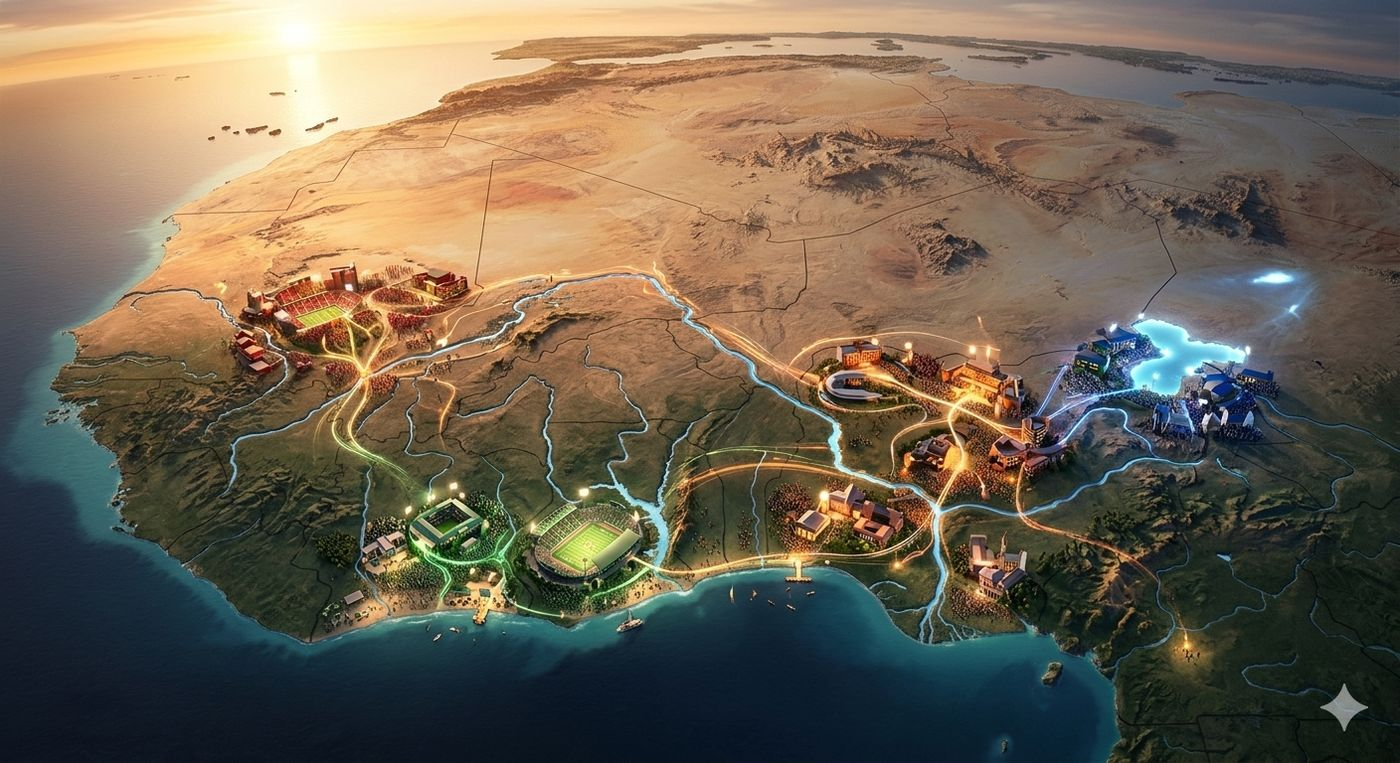
The relaunch season is structured across geographic competition corridors. This is not logistical convenience. It is a deliberate commercial and content decision built on one foundational insight: proximity creates genuine rivalry, and genuine rivalry creates the kind of unscripted, emotionally charged content that no production budget can manufacture.
Selected participating institutions already have opinions about each other. The platform does not invent these rivalries. It organises them, giving each one a season, a format, a fixture date, and a broadcast moment.
The Lagos Corridor
Nigeria’s commercial capital and its most densely competitive campus environment. Institutions competing within one of the world’s most media-saturated cities, with some of the most passionate, socially connected student populations on the continent. The Lagos corridor is the league’s highest-volume content engine, every matchday generates social media activity that travels through student networks before the final whistle. For sponsors, no other corridor in West African university sport delivers this concentration of digitally active, commercially responsive audience in a single geography.
The Abuja Corridor
Nigeria’s political capital. Institutions whose student bodies carry both institutional pride and national visibility. The Abuja corridor produces competition with a level of media proximity that no other city in the country can match, where campus rivalries intersect with national public life. The stories generated here do not stay on campus. They travel into the national conversation before the post-match analysis is written.
The South-West Corridor
The historical heartland of Nigerian tertiary education. Home to some of the country’s oldest and most rivalrous institutions. The South-West corridor carries decades of pre-existing institutional identity that the platform does not have to create, it simply has to organise. The alumni networks here are among the deepest and most commercially engaged on the continent. A brand activating in the South-West corridor is not reaching students. It is reaching the professionals those students will become, through the competition they already care about.
The South-South / East Corridor
A region with deep sporting culture, extraordinary athletic talent, and fierce, long-standing institutional pride. Every matchup between its institutions is a contested occasion, one that generates local stakes, local press, and local passion that travel far beyond the campus gates. The South-South/East corridor is where the platform’s talent identification case is made most viscerally: this is the geography that has been producing professional-calibre athletes, largely unseen, for decades.
The Ghana and Ivory Coast Corridors
As HiSL’s phased multi-country expansion introduces participating institutions across Ghana and Ivory Coast, the same regional corridor logic applies. In Ghana, a campus community that already competes at international university level anchors the network. In Ivory Coast, deep athletics traditions at key institutions and a high-value governing body relationship provide the structural entry point. Each new corridor extends the platform’s reach without diluting its identity, because the rivalry logic that makes the Nigerian corridors commercially compelling is culturally consistent across West Africa.
Together, the regional corridors span West Africa’s most densely populated and commercially active university environments. As the G20 Sports Infrastructure Advisory has documented, the commercial value of structured sports competition compounds when governance creates consistent, predictable occasions around which sponsors and broadcasters can plan. The corridor model does exactly that: a founding cohort of institutions across multiple markets, a full season of predictable, high-frequency content production that builds toward a multi-country climax.
The Rivalries: Named, Built, and Ready to Travel
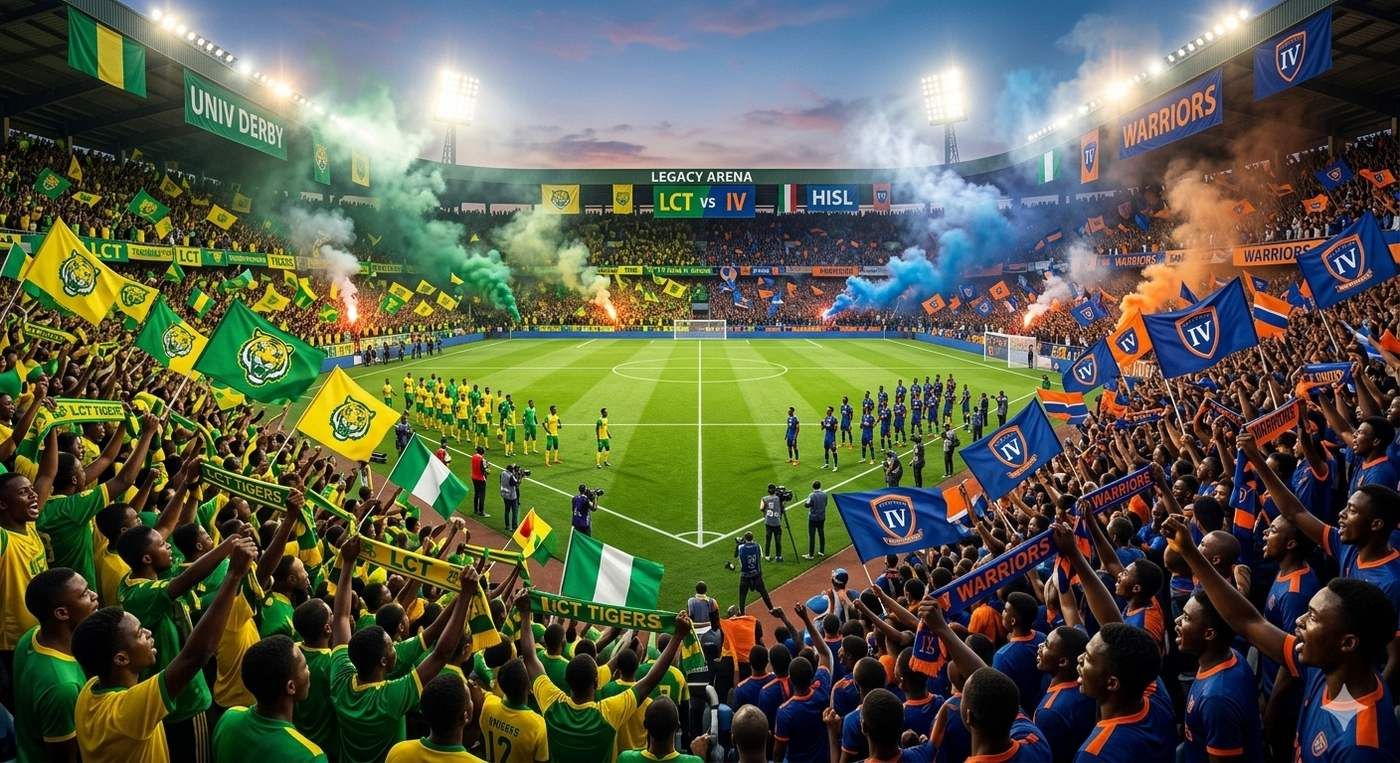
A league without rivalries is a schedule. A league with rivalries is a culture.
The relaunch season introduces named rivalries deliberately. Each derby carries an identity, a history, and a built-in audience that existed long before the platform gave it a stage. These are not marketing constructs, they are the natural competitions that university students across West Africa have been having informal arguments about for years. The platform formalises the stakes.
Participating institutions will be confirmed and announced progressively. The rivalry identities below represent the competition architecture, the named occasions around which the season is structured, and which will be publicly assigned to confirmed institutions at the season-opening announcement.
Football Rivalries
The Lagos Rivalry: Two of West Africa’s most prominent institutions sharing a city and competing for campus supremacy. The highest-profile fixture in the league’s most commercially active corridor, generating urban rivalry energy that brands specifically seek to be associated with. Loud, social, and organically distributed across student networks before the match ends.
The Capital Rivalry: The premier collegiate fixture in the political capital. Two institutions whose student bodies are among the most professionally and civically connected in the country. The one that the national press will cover not just as sport, but as a civic occasion, a prestige fixture that carries a dimension no other matchup in the calendar can replicate.
The Heritage Fixture: The oldest institutional rivalry in the corridor. Two South-West institutions with decades of competitive history, deep alumni loyalty, and the kind of pre-existing intensity that the platform does not have to manufacture. The fixture that proves the South-West corridor is not a recent invention. It is a long-standing fact of West African sporting life.
The Southern Rivalry Two institutions representing the sporting pride of their respective regions in one of the most talent-rich corridors in West African football. The fixture that the South-South/East corridor builds its entire season narrative around, the one that students, alumni, and local press will track from the moment the competition draw is made.
Basketball Rivalries
The basketball calendar carries its own set of named rivalries, each drawing on the institutional identities and campus cultures that make university basketball across West Africa a distinct, high-energy product, and a pipeline that the global basketball development ecosystem is actively seeking to engage.
The Lagos Court Rivalry: The defining collegiate basketball fixture in West Africa’s most connected urban market. Two neighbouring institutions with contrasting identities and a shared city, competing for bragging rights that travel fastest where audiences are largest.
The Faith Rivalry: Two faith-based institutions from the South-West corridor whose rivalry carries both athletic intensity and a unique campus culture dimension. The fixture that generates its own content ecosystem, audiences who follow the institutions, not just the sport.
The Capital Court Rivalry: The premier basketball fixture in the political capital, two institutions competing for the soul of the corridor’s collegiate basketball scene. The fixture that the nationally connected student bodies of the Abuja corridor will claim as their own.
The Technical Rivalry: A contest between two institutions with deep engineering and technical traditions, passionate student fanbases, and alumni whose professional networks carry regional pride into commercial life and back into stadiums. The rivalry that proves university sport is not a distraction from academic identity, it is an expression of it.
Every one of these rivalries is a social media moment waiting to be activated. Every rivalry graphic, fixture announcement, and post-match clip travels organically on student phones, at zero distribution cost to the platform or its commercial partners. According to GSMA projections, Sub-Saharan Africa will contribute 25 percent of all new global mobile internet users between 2025 and 2030. The infrastructure to distribute these moments is expanding at exactly the rate at which the platform is building them.
The Path to the Season Climax: A Beginning, a Middle, and a Climax
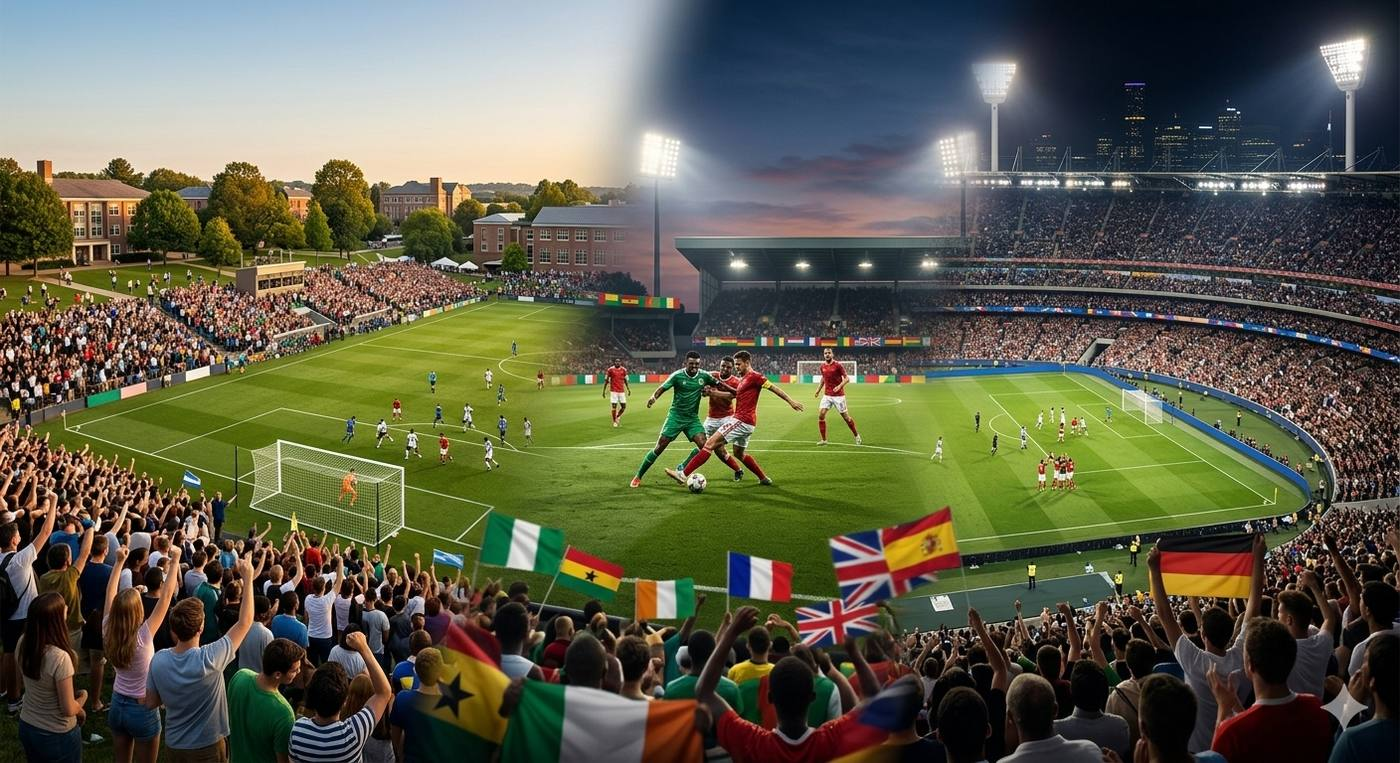
The platform is not a tournament. It is a West Africa university sports platform with a complete narrative arc, a beginning, a middle, and a climax designed to function simultaneously as a broadcast event, a fan occasion, a talent showcase, and an investor milestone.
The season format runs across three structural phases for both football and basketball, a competition architecture that has been designed to maximise fixture volume, audience depth, commercial activation windows, and the predictable content pipeline that broadcasters and sponsors require.
Phase One: Group Stages
Within each regional corridor, participating institutions compete in a round-robin group format, every institution plays every other in its corridor. This maximises fixture volume, delivering the high-frequency content pipeline that makes the platform a year-round media asset rather than a short-term event. It also ensures that every institution receives a full season of competition, not a single-elimination exit that ends before momentum can build.
For sponsors, this means sustained activation windows across the full season. For broadcasters, it means predictable content inventory they can schedule around. For students and fans across Nigeria, Ghana, and Ivory Coast, it means a full season of stakes, rivalries that develop over months, not matches that disappear over weekends. As PwC’s analysis of collegiate sports commercialisation observed, the growing influence of media and streaming rights is the clearest indicator of collegiate sport’s professionalisation. A group stage format is the structural prerequisite for that media rights value.
Phase Two: Corridor Finals
The leading institutions from each corridor’s group stage advance to their respective Corridor Finals, standalone broadcast occasions with their own commercial activation windows, their own peak attendance moments, and their own position in the regional sports conversation. Each Corridor Final is where local narratives become regional stories, and where sponsors with corridor-specific mandates achieve their highest-impact activation. A brand present at a Corridor Final is not reaching one institution’s audience. It is reaching the concentrated attention of every student, alumnus, and sports follower invested in the outcome of the most competitive corridor in West African collegiate sport.
Phase Three: The Season Climax
The season climax is the platform’s commercial and narrative peak, the occasion where the last competing institutions in both football and basketball converge on a single event that functions simultaneously as a broadcast peak, a fan occasion, and an investor milestone. For investors evaluating the platform, the season climax is not just a sporting occasion. It is the documented operational proof, season on season, that the platform delivered its commitment. The IFC’s commitment to African sports infrastructure articulated the institutional requirement precisely: the value of African sports platforms is unlocked when capital, expertise, and regional networks combine to deliver consistent, documented outcomes. The season climax is that documentation, live, in front of an audience, and on the record.
The Season-Opening Announcement: Where the Platform Goes Public
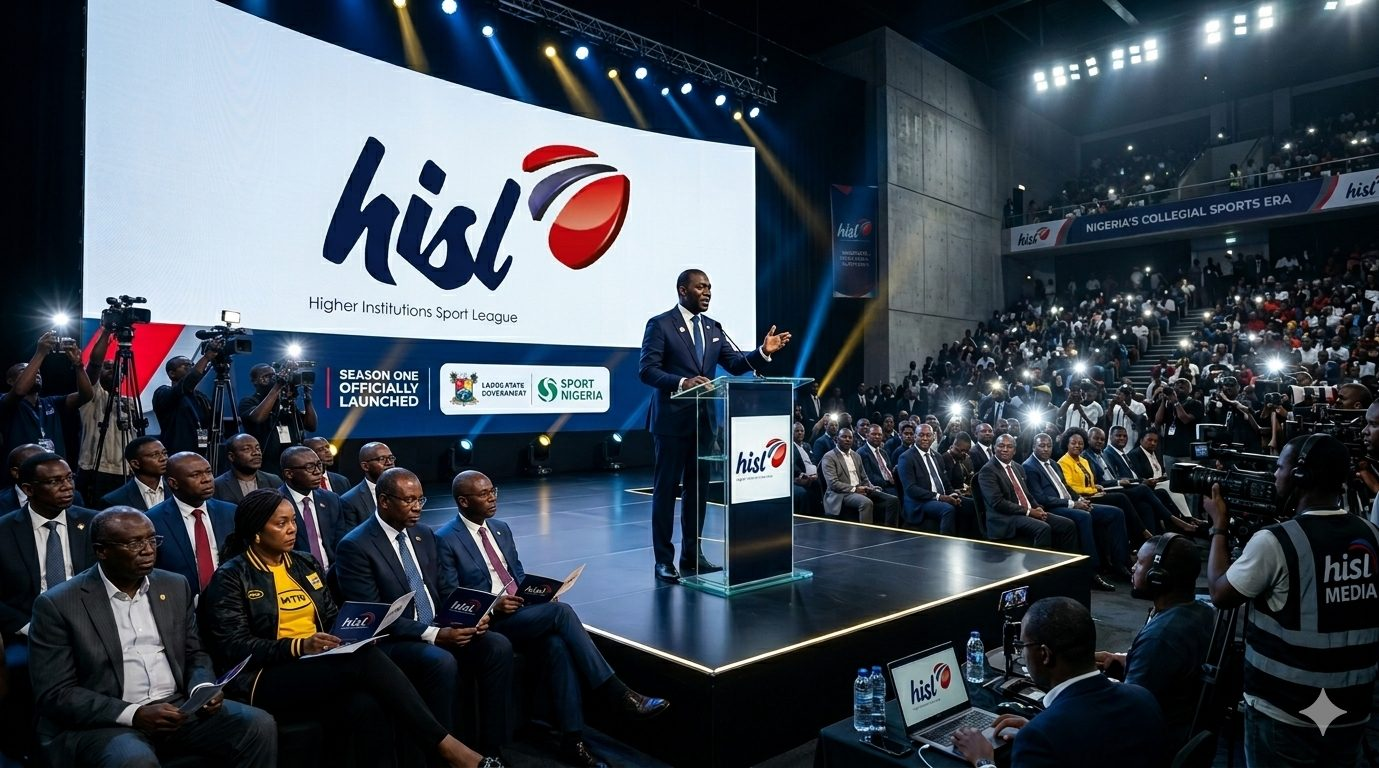
The platform plans to introduce a season-opening announcement moment designed to reveal participating institutions, partnerships, and competition pathways, and it is designed from the ground up to be a public, newsworthy, commercial occasion. Not a private operational update. A room. A stage. An event that the West African sports conversation will not be able to ignore.
At the season-opening reveal, participating institutions from the founding cohort across Nigeria, Ghana, and Ivory Coast will be announced. The competition schedule will be drawn and revealed publicly. The corridor matchups will become common knowledge. The named rivalries will acquire their dates. And the Founding Partner will take the stage, the brand that committed to the season before the first fixture was played, embedded in the platform’s identity from its first public moment through its final occasion of the year.
The season does not begin privately. It began as a fully formed commercial product, with partners already on stage, media already present, and the founding cohort of institutions across three countries already confirmed. This is the design choice that distinguishes this relaunch from every previous iteration of university sport in West Africa.
As PwC’s analysis of collegiate sports noted, the most commercially mature sports seasons are those where the commercial structure is embedded in the season’s identity from day one, not retrofitted as it progresses. The season-opening announcement is the structural mechanism that makes that true for this relaunch.
The platform is not a sports promoter. It is a vertically integrated sports-media ecosystem; built to own the access, control the data, and scale across West Africa. The season-opening announcement is the starting gun.
The Founding Cohort Is Taking Shape. The Platform Is Opening.
The relaunch is real, structured, and in motion across three West African markets. A founding cohort of selected participating institutions. Regional competition corridors in Nigeria, Ghana, and Ivory Coast. Football and basketball, with volleyball, athletics, and tennis following the same competitive framework. Group stages, corridor finals, and a season-climax event that functions as a national broadcast occasion and an investor milestone simultaneously.
Participating institutions will be announced in phases. Rivalry graphics are coming. Corridor reveals are coming. Confirmations will be released progressively across all three markets. Each announcement is a chapter in the season’s opening narrative, and each one travels on the same student networks that will fill the competition venues when the season begins.
Follow @HiSLGlobal on all platforms for the first official institution confirmations, corridor reveal graphics, and fixture announcements as they are released.
Institutions across Nigeria, Ghana, and Ivory Coast interested in participating in the founding cohort can begin the conversation now. The founding cohort is limited in size across all three markets. Early engagement is the most direct route to being part of what is announced on stage.
If you are a brand that wants to own the collegiate sports conversation across West Africa for an entire year, the Founding Partner and Campus Activation Partner positions are available ahead of the season-opening announcement. Both are category-exclusive. Both close when filled.
If you are an investor reading this as evidence that the platform is being built with commercial rigour, it is. The IFC has committed to African sports infrastructure. Afreximbank has signed a facility for African broadcast rights acquisition. The global collegiate sports market is on a documented growth trajectory. The structural conditions for this platform are not forming. They have formed.
The season-opening announcement is the starting gun. To explore university, brand, and investment partnership opportunities across the relaunch season, visit hislglobal.com or contact the team at partnerships@hislglobal.com.